

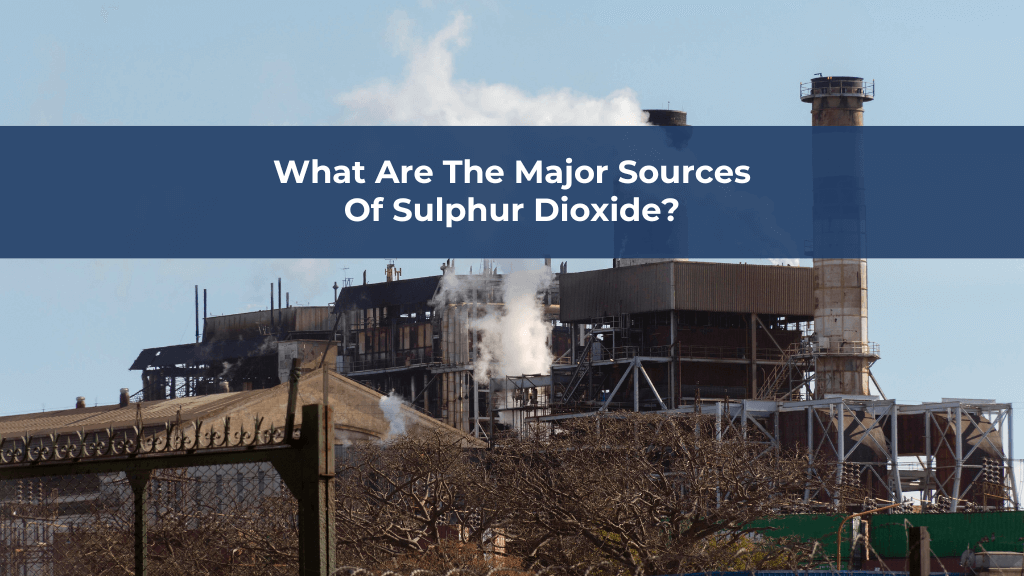
- Largest source: Coal combustion in power plants is the single largest anthropogenic source of SO2 globally, accounting for approximately 45–50% of human-caused emissions.
- Natural sources: Volcanic activity is the primary natural SO2 source, releasing 5–20 million tonnes per year — large eruptions can temporarily double global atmospheric SO2.
- India context: India is one of the world’s largest SO2 emitters, with coal-fired power plants in Uttar Pradesh, Jharkhand, Odisha, Chhattisgarh, and Gujarat identified as major hotspots.
- Health impact: SO2 causes respiratory irritation at 1–5 ppm; long-term exposure near emission sources is associated with increased respiratory and cardiovascular disease rates.
- Environmental impact: SO2 oxidises to sulphuric acid in the atmosphere, forming acid rain that damages aquatic ecosystems, soils, forests, and buildings.
- Industrial uses: Despite its pollutant status, SO2 has important industrial applications in sulphuric acid production, food preservation, paper bleaching, and as a refrigerant.
- What Is Sulphur Dioxide?
- Natural Sources of Sulphur Dioxide
- Coal Combustion: The Dominant Anthropogenic Source
- Industrial Process Sources
- Transport and Petroleum Sources
- Agricultural and Biomass Sources
- Health Impacts of SO2 Exposure
- Environmental Impacts: Acid Rain and Ecosystems
- India’s SO2 Emission Profile
- Control Technologies and Regulations
- Industrial Uses of Sulphur Dioxide
- Related Reading
- Frequently Asked Questions
Sulphur dioxide (SO2) occupies a paradoxical position in modern industrial chemistry: it is one of the most significant air pollutants in terms of human health and environmental damage, yet it is also an important industrial feedstock with legitimate and beneficial uses in food preservation, sulphuric acid manufacture, and specialty chemical production. Understanding both faces of SO2 — as a pollution source and as an industrial commodity — is essential for industry professionals, environmental managers, and anyone concerned with air quality and industrial chemistry in India.
This guide covers every major source of SO2 emissions (natural and anthropogenic), the health and environmental impacts of exposure, India’s specific emission profile and regulatory landscape, and the industrial applications that make SO2 a commercially important chemical. Jaysons Chemical Industries supplies industrial-grade sulphur dioxide to customers requiring it for legitimate industrial applications across India.
1. What Is Sulphur Dioxide?
Sulphur dioxide is a colourless gas with the chemical formula SO2 — one sulphur atom bonded to two oxygen atoms. It has a molecular weight of 64.06 g/mol, a boiling point of -10°C (meaning it is a gas at ambient temperature but readily liquefied under modest pressure for storage and transport), and a sharp, pungent, suffocating odour detectable at concentrations as low as 0.5 ppm.
SO2 is produced whenever sulphur-containing materials are oxidised — in combustion of coal, oil, or natural gas containing sulphur impurities; in metal smelting where sulphide ores are roasted; and in volcanic activity where elemental sulphur and sulphide minerals are oxidised. Once in the atmosphere, SO2 can be further oxidised to sulphuric acid, making it a precursor to acid rain and secondary particulate matter.
| Property | Value |
|---|---|
| Chemical formula | SO2 |
| Molecular weight | 64.06 g/mol |
| Physical state at STP | Colourless gas |
| Boiling point | -10°C |
| Odour threshold | 0.5 ppm (sharp, pungent) |
| WHO 24-hour guideline | 20 micrograms/m3 (7.6 ppb) |
| OSHA TLV-TWA | 2 ppm |
| IDLH concentration | 100 ppm |
2. Natural Sources of Sulphur Dioxide
Volcanic Activity
Volcanic eruptions and ongoing volcanic degassing are the largest natural sources of atmospheric SO2. Active volcanoes continuously emit SO2 from magma degassing — the gas dissolves in groundwater and is released as volcanic hot springs and fumaroles, or is emitted directly in eruption plumes. The global volcanic SO2 emission rate is estimated at 5–20 million tonnes per year during non-eruption periods. During major eruptions, this rate can spike dramatically — the 1991 eruption of Mount Pinatubo in the Philippines injected approximately 20 million tonnes of SO2 into the stratosphere in a single event, causing measurable global cooling for 1–2 years.
Biological Decay
Decomposition of organic matter in anaerobic environments (swamps, wetlands, ocean sediments) produces hydrogen sulphide (H2S), which can be oxidised to SO2 in the atmosphere. This biological source is relatively minor compared to volcanic and anthropogenic sources but contributes to background sulphur cycling in coastal and wetland environments.
Ocean Emissions
Marine phytoplankton produce dimethylsulphide (DMS), which is released from ocean surfaces and oxidised to SO2 and then to sulphate aerosols in the marine atmosphere. Marine SO2 from DMS oxidation is estimated at 15–25 million tonnes per year — a significant natural source that provides cloud condensation nuclei over remote ocean areas and influences global climate through cloud formation effects.
3. Coal Combustion: The Dominant Anthropogenic Source
Coal combustion is the single largest human-caused source of SO2 globally, accounting for approximately 45–50% of total anthropogenic SO2 emissions. All coal contains sulphur — typically 0.5–3.5% by weight, with some high-sulphur coals containing up to 5% or more. When coal burns, the sulphur oxidises to SO2:
S + O2 → SO2
A 1,000 MW coal power plant burning coal with 1% sulphur content emits approximately 50,000–80,000 tonnes of SO2 per year without flue gas desulphurisation. Multiplied across India’s approximately 200 GW of coal-fired power plant capacity, the SO2 emission from the power sector alone is a major air quality challenge — particularly in states like Uttar Pradesh, Jharkhand, Maharashtra, Chhattisgarh, and Odisha where coal plant clusters are concentrated.
4. Industrial Process Sources
Non-Ferrous Metal Smelting
Smelting of sulphide ores — copper (CuFeS2, chalcopyrite), zinc (ZnS, sphalerite), lead (PbS, galena), and nickel — involves roasting the ore at high temperature in air to oxidise and remove sulphur. This produces very high-concentration SO2 streams (15–40% SO2) that are ideally suited for recovery as sulphuric acid. In modern smelters, SO2 capture and sulphuric acid production is standard practice — both for revenue (sulphuric acid is valuable) and regulatory compliance. Historical smelters without SO2 capture caused some of the most severe localised SO2 pollution incidents ever recorded.
Oil Refining
Crude oil contains sulphur compounds that are removed during refining by hydrodesulphurisation (HDS). The sulphur removed is recovered as elemental sulphur (via the Claus process) — a valuable raw material for sulphuric acid production. Some SO2 is emitted from catalytic cracking and other refinery operations. India’s large refinery complex at Jamnagar (Reliance Industries) and other refineries are significant sulphur handling facilities, though modern refineries are designed to minimise SO2 emissions.
Cement Manufacturing
Cement kilns burning coal or petroleum coke as fuel emit SO2 proportional to the fuel sulphur content. Cement production is India’s third-largest industrial source of SO2 after power and steel. Some SO2 is captured within the kiln chemistry — alkaline calcium compounds in the raw meal react with SO2 — but significant emissions occur, particularly with high-sulphur fuels.
Sulphuric Acid Manufacturing
Paradoxically, sulphuric acid plants are major SO2 handlers but ideally zero-emission sources. In the Contact process, elemental sulphur is burned to SO2 which is then catalytically oxidised to SO3 and absorbed in water. Modern double-absorption sulphuric acid plants achieve SO2 emission conversion efficiencies above 99.7%. Emissions primarily arise from plant start-up, shutdown, and process upsets.
5. Transport and Petroleum Sources
Combustion of diesel, heavy fuel oil, and marine bunker fuel (which historically had high sulphur content of 3.5%) in vehicles and ships is a significant SO2 source — particularly for shipping. The International Maritime Organization’s (IMO) 2020 global sulphur cap reduced permitted marine fuel sulphur content from 3.5% to 0.5%, dramatically reducing shipping SO2 emissions globally. India’s Bharat Stage VI fuel quality standards (equivalent to Euro VI, implemented nationwide from April 2020) limit diesel sulphur to 10 ppm — a 97% reduction from pre-BS VI standards.
6. Agricultural and Biomass Sources
Agricultural biomass burning — stubble burning after rice and wheat harvest, particularly in Punjab and Haryana — releases SO2 alongside other pollutants from the sulphur content of crop residues. While agricultural SO2 from biomass burning is minor compared to coal combustion, it creates acute local and regional air quality episodes during harvest seasons, contributing to the severe winter air pollution events in North India.
7. Health Impacts of SO2 Exposure
SO2 is a respiratory irritant that affects the airways at concentrations well below those of many other industrial gases. Its health effects are concentration-dependent and disproportionately affect people with pre-existing respiratory conditions.
Acute Respiratory Effects
At 1–3 ppm: detectable taste and odour; bronchoconstriction in asthmatics and sensitive individuals, causing coughing, wheezing, and chest tightness. At 3–10 ppm: severe bronchoconstriction in most people; significant reduction in lung function measurable by spirometry. At 10–50 ppm: acute respiratory distress; potential chemical burns to airway mucosa; dangerous for all individuals without respiratory protection. The WHO 24-hour guideline of 20 micrograms/m3 (approximately 8 ppb) reflects the level below which significant respiratory health effects are not expected in the general population.
Long-Term and Population-Level Effects
Long-term residence near high SO2 emission sources (coal power plants, smelters) is associated with increased prevalence of chronic obstructive pulmonary disease (COPD), asthma, reduced lung function development in children, and increased cardiovascular disease rates. Indian epidemiological studies have documented elevated respiratory disease rates in communities adjacent to large coal-fired power plant clusters.
8. Environmental Impacts: Acid Rain and Ecosystems
SO2 in the atmosphere reacts with water, oxygen, and oxidants to form sulphuric acid and ammonium sulphate aerosols. These species deposit on the Earth’s surface as acid rain (wet deposition) and dry acid particles (dry deposition), with several significant environmental consequences.
Aquatic Ecosystem Acidification
Acid deposition reduces the pH of lakes, rivers, and streams, particularly in areas with low-buffering-capacity (granitic) bedrock. pH values below 5.5 impair reproduction in fish; below 5.0, fish populations collapse entirely. Freshwater acidification from SO2 deposition devastated fisheries in Scandinavia, Canada, and the northeastern USA in the 1970s–1980s before emission controls reduced acid deposition substantially.
Soil and Forest Damage
Acid deposition leaches base cations (calcium, magnesium) from soils, reducing soil fertility and nutrient availability to forest trees. It also mobilises toxic aluminium ions from soil minerals into soil water, poisoning fine root systems. Combined with ozone stress, acid deposition contributed to widespread forest dieback in Central Europe in the 1980s (Waldsterben) and continues to damage forests in regions with inadequate SO2 emission controls.
9. India’s SO2 Emission Profile
India emits approximately 7–9 million tonnes of SO2 per year from anthropogenic sources — making it one of the world’s top three SO2 emitters alongside China and the USA. Power sector emissions account for approximately 60–65% of this total; industrial process sources (steel, cement, fertilisers) for approximately 20–25%; and transport for the remainder.
The CPCB’s 2015 emission standards for thermal power plants require: SO2 emission limits of 200 mg/Nm3 for new plants and 600 mg/Nm3 for existing plants (with stricter limits near sensitive areas); compliance through flue gas desulphurisation (FGD) systems or fuel blending with low-sulphur coal. Implementation timelines have been repeatedly extended, but FGD installation is now proceeding at scale — with significant implications for the gypsum market (FGD gypsum as a cement industry raw material) and for SO2 emissions reduction.
10. Control Technologies and Regulations
Flue Gas Desulphurisation (FGD)
The dominant SO2 control technology for coal power plants and large industrial boilers is wet limestone FGD — flue gas passes through a scrubber where it contacts a limestone (CaCO3) slurry, reacting to form calcium sulphite and then calcium sulphate (gypsum, CaSO4.2H2O). Modern FGD systems achieve SO2 removal efficiencies of 95–99%. The gypsum by-product is used in wallboard manufacturing and cement production — a circular economy product from a pollution control process.
Fuel Switching
Switching from high-sulphur coal to low-sulphur coal, natural gas, or renewable energy eliminates SO2 at source rather than treating the exhaust. Natural gas contains negligible sulphur and produces essentially zero SO2 on combustion — India’s gas-fired power plants are SO2-free. The ongoing transition from coal to renewables will reduce India’s SO2 emissions substantially over the coming decades as coal plant capacity is retired.
11. Industrial Uses of Sulphur Dioxide
Despite its pollutant status, SO2 has important and legitimate industrial applications. Industrial-grade sulphur dioxide from Jaysons Chemical Industries is supplied to customers requiring it for the following applications.
Food Preservation and Winemaking
SO2 is one of the oldest food preservatives in history — used in winemaking since ancient Roman times. It inhibits oxidation and microbial spoilage in wine, dried fruits (apricots, raisins), fruit juices, and some processed foods. Food-grade SO2 is regulated by FSSAI in India, with maximum permitted levels specified for each food category.
Sulphuric Acid Raw Material
SO2 is the primary feedstock for sulphuric acid production via the Contact process. Elemental sulphur (from oil refining desulphurisation or natural deposits) is burned to SO2, which is then oxidised to SO3 over a vanadium pentoxide catalyst and absorbed in water. Sulphuric acid is one of the world’s most important industrial chemicals, consumed in fertiliser production, mining, batteries, and chemical manufacturing.
Textile and Paper Bleaching
SO2 is used to bleach wool, silk, straw, and some cellulosic materials — its reducing action removes colour from oxidised chromophores. In paper manufacturing, sulphite pulping uses SO2 and bisulphite chemistry to dissolve lignin from wood chips, producing cellulose pulp for paper production.
Industrial Disinfection
SO2 gas is used to fumigate food storage areas, wine tanks, and water treatment facilities as a disinfectant and antifungal agent. Its broad antimicrobial activity at relatively low concentrations makes it effective for surface disinfection in enclosed spaces.
Industrial Sulphur Dioxide Supply from Jaysons Chemical Industries
Jaysons Chemical Industries supplies high-purity industrial-grade sulphur dioxide in cylinders and tonners to food processing, chemical manufacturing, textile, and water treatment customers across India — with full PESO compliance and documentation.
12. Related Reading
Frequently Asked Questions
What are the major sources of sulphur dioxide emissions?
The major sources of SO2 are: coal combustion in power plants (approximately 45–50% of anthropogenic emissions globally); industrial processes including metal smelting, oil refining, and cement production; volcanic activity (the largest natural source, 5–20 million tonnes/year); petroleum combustion in vehicles and ships; and biomass burning. In India, coal-fired power plants are the dominant SO2 source.
What is the chemical formula of sulphur dioxide?
The chemical formula of sulphur dioxide is SO2 — one sulphur atom bonded to two oxygen atoms. Molecular weight 64.06 g/mol, bent molecular geometry. It is a colourless gas at standard conditions with a sharp pungent odour detectable at 0.5 ppm.
How does sulphur dioxide cause acid rain?
SO2 in the atmosphere reacts with water vapour and oxygen to form sulphuric acid: 2SO2 + O2 + 2H2O → 2H2SO4. This dissolves in atmospheric moisture to produce acid rain with pH values significantly below 5.6. Acid rain damages aquatic ecosystems, leaches soil nutrients, damages forests, and corrodes buildings and metals.
What are the health effects of sulphur dioxide exposure?
At 1–5 ppm, SO2 causes nose and throat irritation and bronchoconstriction in sensitive individuals. At 10–20 ppm, severe bronchospasm and choking occur. Long-term exposure near coal plants or smelters is associated with increased respiratory disease, reduced lung function, and cardiovascular disease. WHO guidelines recommend ambient levels below 20 micrograms/m3 (24-hour average).
Is sulphur dioxide used industrially?
Yes. SO2 is used as a raw material for sulphuric acid production; as a food preservative and winemaking agent; as a bleaching agent for wool, silk, and paper; as an industrial disinfectant; and as a refrigerant in some specialty applications. Jaysons Chemical Industries supplies industrial-grade sulphur dioxide to customers requiring it for these applications across India.
What is India’s sulphur dioxide emission situation?
India emits approximately 7–9 million tonnes of SO2 per year — one of the world’s top three emitters. Coal-fired power plants account for approximately 60–65% of this total. CPCB’s 2015 standards require FGD installation on large thermal power plants, and compliance implementation is now proceeding at scale, driving SO2 emission reductions in the power sector.
How is sulphur dioxide controlled at industrial sources?
SO2 control technologies include: wet limestone FGD (scrubbing SO2 with limestone slurry, producing gypsum as by-product, 95–99% removal efficiency); fuel switching to low-sulphur coal, natural gas, or renewables; and process modifications in smelters to capture SO2 for sulphuric acid production. Regulatory compliance in India is enforced by CPCB and State Pollution Control Boards.
What is the difference between sulphur dioxide and sulphur trioxide?
Sulphur dioxide (SO2) is produced directly by sulphur combustion and volcanic activity. Sulphur trioxide (SO3) is produced by further oxidation of SO2 — in the atmosphere or industrially over a vanadium pentoxide catalyst. SO3 reacts immediately with water to form sulphuric acid (H2SO4). The Contact process for industrial sulphuric acid production oxidises SO2 to SO3 then absorbs in water.