

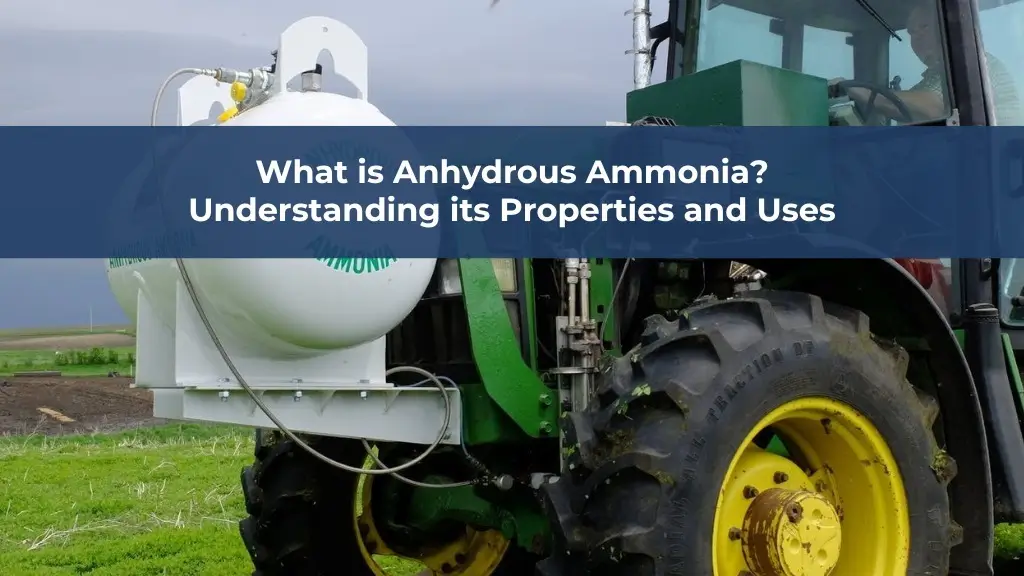
- Water-free pure NH3: Anhydrous means no water — stored at ~10 bar at 25°C or -33°C at atmospheric pressure; 82% nitrogen by molecular weight.
- IS 5116 standard: BIS quality standard for anhydrous ammonia — Grade 1 (refrigerant, ≥99.95% NH3) and Grade 2 (technical, ≥99.5% NH3).
- Superior refrigerant: Higher COP than HFCs, zero GWP, zero ODP — the long-term refrigerant of choice as HFCs phase down under the Kigali Amendment.
- India’s largest users: Cold storage, fertiliser production, industrial chemicals, water treatment, power/cement SCR, and metallurgy.
- Green energy role: The form of ammonia used as an energy carrier and hydrogen vector in India’s National Green Hydrogen Mission export programme.
- PESO mandatory: All storage requires PESO licence under Gas Cylinders Rules 2016 — IS 7285 cylinders, IS 3196 tonners, IS 7895 tankers.
- What Is Anhydrous Ammonia?
- Physical and Chemical Properties
- IS 5116 Quality Standard
- Industrial Refrigeration
- Fertiliser and Chemical Manufacturing
- Water Treatment
- Power Generation and Cement
- Metallurgy and Heat Treatment
- Green Energy and Hydrogen Carrier
- Storage and Transport in India
- Anhydrous vs Liquor Ammonia: Choosing the Right Product
- Related Reading
- Frequently Asked Questions
Anhydrous ammonia is one of the world’s most produced and most important industrial chemicals — approximately 240 million tonnes manufactured globally each year, underpinning food production, industrial refrigeration, chemical synthesis, emission control, and an emerging role as a zero-carbon energy carrier. In India, anhydrous ammonia is consumed at approximately 19–20 million tonnes per year (FY2025), making it essential to the country’s fertiliser industry, cold chain infrastructure, chemical sector, and increasingly its clean energy ambitions. Understanding its properties, applications, IS standards, and handling requirements is essential knowledge for every industrial buyer, plant engineer, and safety professional in India’s ammonia sector.
Jaysons Chemical Industries supplies IS 5116-certified anhydrous ammonia in cylinders, tonners, and bulk tankers to customers across every sector described in this guide.
1. What Is Anhydrous Ammonia?
Anhydrous ammonia is pure ammonia — the chemical compound NH3 (one nitrogen atom bonded to three hydrogen atoms) in its undiluted, water-free form. The word “anhydrous” derives from the Greek “anydros” meaning without water. This distinguishes it from aqueous ammonia solutions (ammonium hydroxide, liquor ammonia) in which ammonia is dissolved in water at 20–30% concentration.
At standard atmospheric pressure and room temperature, anhydrous ammonia exists as a colourless gas with a characteristic pungent odour. It is compressed to liquid for storage and transport — either as pressurised liquid at ambient temperature (storing it above its atmospheric boiling point of -33°C) or as refrigerated liquid at -33°C in insulated tanks. In both cases, the stored material is liquid ammonia at a concentration of essentially 100% NH3 — compared to 20–28% in liquor ammonia. This concentration difference makes anhydrous ammonia the product of choice for applications requiring high nitrogen delivery, refrigerant functionality, or water-free conditions.
2. Physical and Chemical Properties
| Property | Value |
|---|---|
| Molecular formula | NH₃ |
| Molecular weight | 17.03 g/mol |
| Nitrogen content by weight | 82.2% |
| Boiling point (1 atm) | -33.35°C |
| Freezing point | -77.7°C |
| Vapour pressure at 25°C | ~10 bar (1.0 MPa) |
| Liquid density at -33°C | 682 kg/m³ |
| Vapour density relative to air | 0.59 (lighter than air) |
| Heat of vaporisation at BP | 1,371 kJ/kg (very high) |
| Solubility in water at 20°C | ~52 g/100 mL (highly soluble) |
| pH of 1% solution | ~11.6 |
| Flammability limits in air | 15–28% v/v |
| Auto-ignition temperature | 651°C |
| TLV-TWA | 25 ppm |
| IDLH | 300 ppm |
| Global warming potential (GWP) | 0 (no greenhouse effect) |
| Ozone depletion potential (ODP) | 0 |
Two physical properties define anhydrous ammonia’s industrial value: its very high heat of vaporisation (1,371 kJ/kg — among the highest of any common refrigerant) which makes it exceptionally efficient at absorbing heat; and its 82.2% nitrogen content by molecular weight — the highest nitrogen concentration of any commercially available nitrogen source, making it the most efficient nitrogen delivery vehicle for fertiliser applications.
3. IS 5116 Quality Standard
IS 5116 (Specification for Ammonia Anhydrous) is the BIS standard governing anhydrous ammonia quality in India. It specifies two product grades with the following key parameters:
| Parameter | Grade 1 (Refrigerant) | Grade 2 (Technical) |
|---|---|---|
| Ammonia (NH3) content, min | 99.95% w/w | 99.5% w/w |
| Water content, max | 0.20% w/w | 0.50% w/w |
| Oil content, max | 5 mg/kg | Not specified |
| Non-condensable gases, max | 50 ppm v/v | Not specified |
| Colour | Colourless | Colourless |
Grade 1 (refrigerant grade) is the standard product supplied for refrigeration systems — the strict water and oil limits prevent compressor damage and contamination of the refrigeration system. Grade 2 is used for fertiliser application and industrial chemical synthesis where the very high purity requirements of Grade 1 are not necessary. Every batch supplied by Jaysons Chemical Industries carries a Certificate of Analysis confirming compliance with the applicable IS 5116 grade.
4. Industrial Refrigeration
Industrial refrigeration is the largest single use of anhydrous ammonia in India — hundreds of cold storage facilities, food processing plants, ice plants, breweries, and pharmaceutical cold rooms rely on ammonia refrigeration systems operating on the vapour-compression cycle. Ammonia’s exceptional refrigeration properties make it the refrigerant of choice for large-scale industrial applications:
Its COP (coefficient of performance — cooling output per unit of electrical energy input) is 3–10% higher than HFC alternatives at comparable operating temperatures, delivering direct energy cost savings. Its zero global warming potential (GWP = 0) and zero ozone depletion potential (ODP = 0) make it future-proof as HFCs face accelerating phase-down under the Kigali Amendment — facilities investing in ammonia refrigeration avoid future refrigerant replacement costs and regulatory compliance risks. Its high latent heat means a small quantity provides large cooling — approximately one-seventh the charge mass of equivalent R-22 systems, reducing refrigerant inventory and leak severity.
5. Fertiliser and Chemical Manufacturing
India’s fertiliser industry is the largest single consumer of anhydrous ammonia by volume — consuming approximately 17+ million tonnes per year (FY2025) across integrated ammonia-urea complexes. From a single tonne of anhydrous ammonia: 1.76 tonnes of urea can be produced (combining ammonia with CO2); approximately 2.9 tonnes of ammonium nitrate solution; or approximately 3.7 tonnes of diammonium phosphate (DAP, reacting with phosphoric acid). Anhydrous ammonia is also the feedstock for a broad range of industrial chemical derivatives: nitric acid (via catalytic oxidation — Ostwald process), caprolactam (for nylon-6 production), acrylonitrile (for acrylic fibre and ABS resin), methylamines (mono, di, trimethylamine — for pharmaceuticals and agrochemicals), and many other nitrogen-containing chemical building blocks.
6. Water Treatment
Municipal water utilities across India use anhydrous ammonia (or liquor ammonia, depending on facility scale) for chloramination — combining ammonia with chlorine to produce monochloramine (NH2Cl) as a more stable, longer-lasting disinfectant residual for large distribution networks. Chloramination reduces trihalomethane (THM) formation compared to free chlorine treatment and provides better biofilm control in long distribution mains. Large water treatment plants receiving daily bulk tanker deliveries of anhydrous ammonia use IS 7895 tankers; smaller facilities may use IS 3196 tonners or liquor ammonia in tankers. Anhydrous ammonia is also used for pH correction of treated water to prevent pipe corrosion.
7. Power Generation and Cement
Anhydrous ammonia (or liquor ammonia) is the reagent in Selective Catalytic Reduction (SCR) DeNOx systems installed at coal-fired power plants and cement kilns to meet CPCB NOx emission standards. The ammonia reacts with NOx over a catalyst to form harmless nitrogen gas and water: 4NH3 + 4NO + O2 → 4N2 + 6H2O. Modern Indian coal power plants and large cement facilities require continuous ammonia supply — from IS 7895 bulk tankers replenishing on-site storage — to maintain continuous SCR operation. Jaysons Chemical Industries designs, supplies, and installs SCR DeNOx systems and provides the ongoing ammonia supply for these applications through its SCR DeNOx project services.
8. Metallurgy and Heat Treatment
Anhydrous ammonia is thermally dissociated (“cracked”) to produce a 75% hydrogen / 25% nitrogen atmosphere used extensively in metal heat treatment processes. Applications include: bright annealing of stainless steel and copper alloys (preventing surface oxidation during heat treatment); nitriding and carbo-nitriding (introducing nitrogen into steel surfaces for hardness and wear resistance); furnace brazing in a protective atmosphere; sintering of powder metallurgy components; and glass-to-metal sealing processes. The dissociated ammonia atmosphere replaces the need for separate hydrogen and nitrogen gas cylinders for many of these applications, providing a cost-effective protective or reactive atmosphere at the point of use.
9. Green Energy and Hydrogen Carrier
Anhydrous ammonia’s role in India’s energy future is expanding rapidly under the National Green Hydrogen Mission. Green ammonia — produced by combining green hydrogen (from renewable-powered water electrolysis) with nitrogen using the Haber-Bosch process — represents a pathway to carbon-free nitrogen chemistry and zero-emission fuel. India’s solar and wind resources make it one of the most competitive green ammonia production locations globally.
As an energy carrier, anhydrous ammonia offers significant logistical advantages over pure hydrogen: ammonia liquefies at -33°C (vs -253°C for hydrogen), requires approximately half the energy for liquefaction, has existing global trade infrastructure, and can be reconverted to hydrogen at the destination through cracking. India is targeting green ammonia export to Japan, South Korea, and Europe — markets seeking low-carbon hydrogen imports — as a central element of its green hydrogen export strategy. Projects in Gujarat, Rajasthan, Andhra Pradesh, and Tamil Nadu are advancing under the PLI programme and the government’s ₹10,000 crore viability gap funding scheme introduced in May 2024.
10. Storage and Transport in India
All anhydrous ammonia storage and transport in India is regulated by PESO under Gas Cylinders Rules 2016 and associated IS standards. Key requirements include: IS 7285 cylinders (47, 100, 150 kg) hydrostatic tested every 5 years; IS 3196 tonners (400–1,000 kg) hydrostatic tested every 5 years; IS 7895 road tankers requiring PESO transport permits and annual PRV inspection; PESO storage licence for all quantities; secondary bunding for bulk storage; IS 660-compliant gas detection for refrigeration machine rooms; and PESO-licensed filling stations. Jaysons Chemical Industries operates a 50+ vehicle PESO-licensed transport fleet for nationwide delivery.
11. Anhydrous vs Liquor Ammonia: Choosing the Right Product
| Criterion | Anhydrous Ammonia | Liquor Ammonia |
|---|---|---|
| NH3 concentration | ≥99.5% (IS 5116) | 20–28% (IS 6099) |
| Storage pressure | ~10 bar at 25°C | Atmospheric |
| Storage vessel | Pressure vessel (IS 7285/3196/7895) | HDPE or SS atmospheric tank |
| PESO licence | Mandatory | Required above threshold qty |
| Acute release hazard | Rapid large vapour cloud | Liquid pool, slower vapour |
| Best for | Refrigeration, fertiliser, SCR, metallurgy, chemical synthesis | pH adjustment, cleaning, water treatment dosing, rubber, textiles |
| IS standard | IS 5116 | IS 6099 |
Frequently Asked Questions
What is anhydrous ammonia and how does it differ from liquor ammonia?
Anhydrous ammonia is pure NH3, water-free, stored as pressurised liquid at ~10 bar at 25°C or as refrigerated liquid at -33°C. Liquor ammonia is 20–28% NH3 dissolved in water, stored at atmospheric pressure. Anhydrous is used for refrigeration, fertiliser, SCR, metallurgy, and chemical synthesis; liquor ammonia for pH control, cleaning, water treatment, textiles, and rubber.
What are the key physical properties of anhydrous ammonia?
Boiling point -33.35°C; vapour pressure ~10 bar at 25°C; liquid density 682 kg/m³ at -33°C; 82.2% nitrogen by weight; heat of vaporisation 1,371 kJ/kg; flammability limits 15–28% in air; TLV-TWA 25 ppm; IDLH 300 ppm; zero GWP; zero ODP. Lighter than air (MW 17 vs air 29).
What IS standard governs anhydrous ammonia in India?
IS 5116 — two grades: Grade 1 (refrigerant, ≥99.95% NH3, ≤0.2% water, ≤5 mg/kg oil) and Grade 2 (technical, ≥99.5% NH3). Storage and transport regulated by IS 7285 (cylinders), IS 3196 (tonners), IS 7895 (road tankers), IS 660 (refrigeration safety), all under PESO Gas Cylinders Rules 2016 licensing.
Why is anhydrous ammonia preferred over synthetic refrigerants?
3–10% higher COP than HFCs; zero GWP (future-proof as HFCs phase down under Kigali Amendment); zero ODP; significantly lower cost; one-seventh the charge mass of equivalent HFC systems. Disadvantage: toxicity requiring fixed gas detection, PPE, emergency systems, and PESO licensing.
What industries in India use anhydrous ammonia?
Cold storage and industrial refrigeration (largest sector); fertiliser manufacturing (urea, DAP, ammonium sulphate); industrial chemicals (nitric acid, caprolactam, acrylonitrile, methylamines); water treatment (chloramination); power generation and cement (SCR DeNOx); and metallurgy (bright annealing, nitriding, furnace atmospheres). Total Indian consumption ~19–20 MMT/year (FY2025).
What are the main hazards of anhydrous ammonia?
Toxicity (IDLH 300 ppm — controlled by fixed gas detection, ventilation, PPE, training); corrosion (chemical and cryogenic burns — controlled by PPE and emergency shower within 10 metres); pressure hazard (~10 bar at 25°C — controlled by IS 3196/7285 vessel certification, PRV systems, PESO licensing). All storage requires PESO licence.
What packaging formats is anhydrous ammonia available in India?
IS 7285 cylinders (47, 100, 150 kg); IS 3196 tonners (400, 700, 1,000 kg); IS 7895 road tankers (7–21 MT); ISO/UN T50 tanks (~12 MT) for export. All require current PESO test certificates and PRV inspection certificates. Left-hand thread connections per IS 5765. Delivery by PESO-licensed PESO-endorsed drivers.
What is the role of anhydrous ammonia in India’s green energy transition?
As a green ammonia export product — carrying green hydrogen embedded in its molecule for long-distance ocean shipping to Japan, South Korea, and Europe, where it is cracked back to hydrogen or combusted directly. India targets 5 MMT/year green hydrogen by 2030 under the National Green Hydrogen Mission, with green ammonia as the primary export vector. Government PLI support and ₹10,000 crore viability gap funding introduced in May 2024 support this transition.