

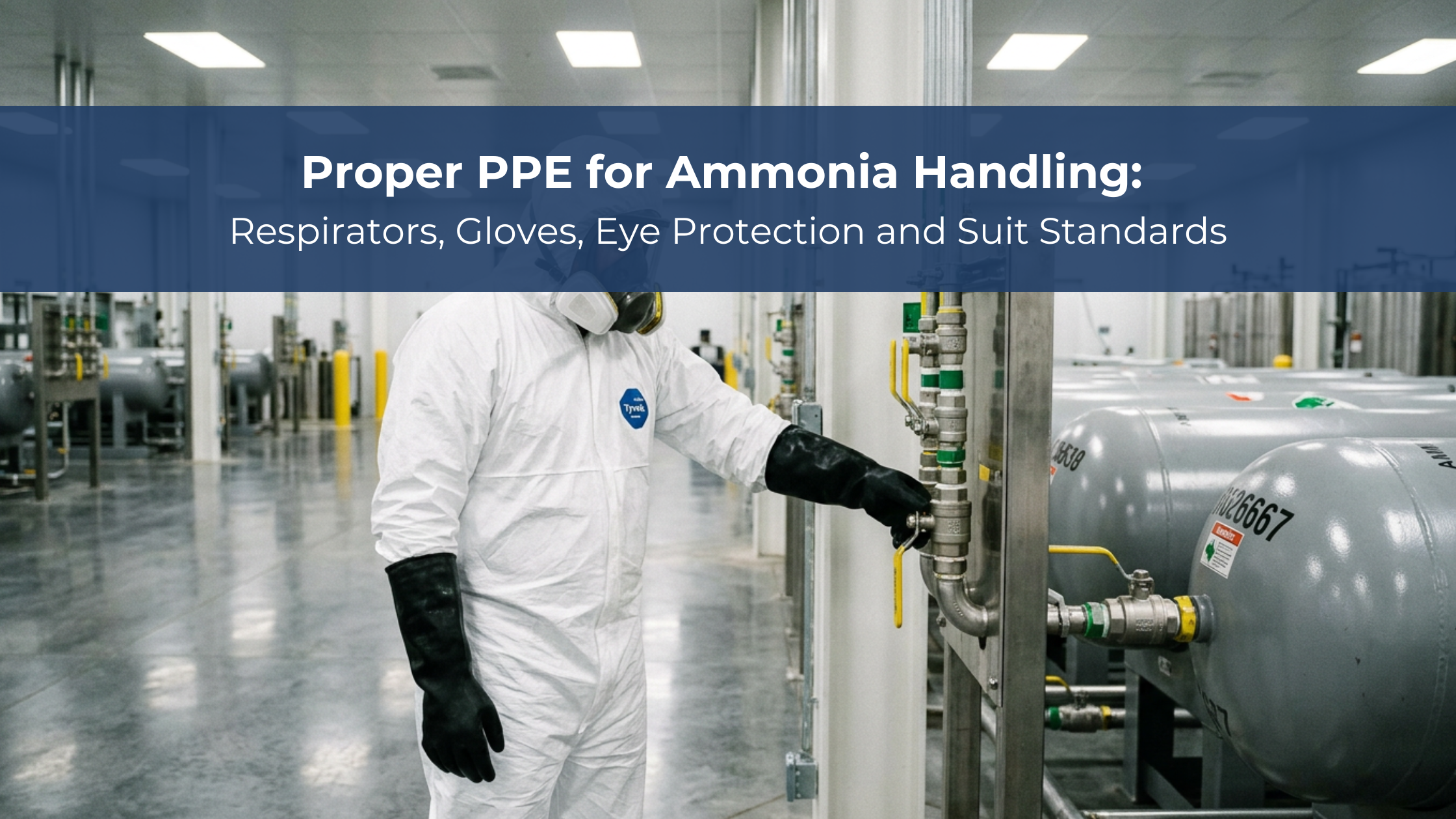
- Concentration-matched PPE: Respiratory protection must be escalated from half-face APR to full-face APR to SCBA as ammonia concentration increases through 25, 50, and 300 ppm thresholds.
- Glove material matters: Butyl rubber outperforms neoprene and nitrile for anhydrous ammonia; natural rubber and PVC are inadequate for any ammonia application.
- Goggles not glasses: Chemical splash goggles with indirect ventilation are the minimum eye protection standard; safety glasses offer no meaningful protection.
- Fit testing is mandatory: OSHA 29 CFR 1910.134 requires annual respirator fit testing for all tight-fitting respirators.
- Suit selection: Level B splash suits suffice for most ammonia operations; Level A encapsulating suits are required for IDLH entry with liquid anhydrous ammonia contact risk.
- Breakthrough detection: Ammonia cartridges have no ESLI (End of Service Life Indicator); change immediately upon detecting any ammonia odour through the respirator.
- Why PPE Selection Matters for Ammonia
- Regulatory Framework for Ammonia PPE
- Respiratory Protection for Ammonia
- Eye and Face Protection
- Gloves and Hand Protection
- Body and Skin Protection
- PPE Levels for Different Ammonia Work Scenarios
- Donning and Doffing Procedures
- PPE Maintenance and Inspection
- Who Handles Ammonia and Needs This PPE?
- Related Reading
- Frequently Asked Questions
Ammonia is simultaneously one of the most industrially essential and one of the most physiologically aggressive chemicals in common use. It corrodes eyes and mucous membranes at concentrations as low as 50 ppm, burns skin on contact in its anhydrous or concentrated aqueous form, and overwhelms the respiratory system rapidly at IDLH levels of 300 ppm. The only reliable barrier between a worker and these hazards is correctly selected, properly fitted, and well-maintained PPE for ammonia handling. At Jaysons Chemical Industries, we supply anhydrous ammonia and liquor ammonia across multiple industries and we support our customers in understanding the full safety requirements of every product we deliver. Our comprehensive ammonia safety equipment guide provides an overview; this article goes deeper on every PPE category. Explore our full services and product range designed to support safe ammonia operations.
1. Why PPE Selection Matters for Ammonia
Many chemical hazards are forgiving of moderate PPE selection errors. Ammonia is not. Its extreme water solubility means it attacks moist tissues — eyes, lungs, nasal passages, and skin — instantaneously. The margin between nuisance irritation and life-altering injury is a matter of seconds of unprotected exposure at high concentrations. Understanding why each PPE category addresses a specific physiological risk is the foundation for making correct equipment choices.
PPE selection for ammonia must address three simultaneously occurring hazard pathways: inhalation of vapour or aerosol, eye and mucous membrane contact, and skin contact with gas or liquid. A selection that addresses only one or two of these pathways leaves the worker partially unprotected. The OSHA Hierarchy of Controls places PPE as the last line of defence after engineering controls and administrative controls, but in practice, PPE must always be available because engineering controls can and do fail.
PPE only protects the wearer if it fits correctly and is worn continuously throughout the exposure task. Research consistently shows that the most common cause of PPE failure is improper wear or premature removal, not equipment defect.
2. Regulatory Framework for Ammonia PPE
PPE selection and use for ammonia handling is governed by a hierarchy of standards that together specify the minimum acceptable protection levels.
| Standard / Regulation | Jurisdiction | Scope |
|---|---|---|
| OSHA 29 CFR 1910.132-138 | USA | General PPE requirements, hazard assessment, fit testing |
| OSHA 29 CFR 1910.134 | USA | Respiratory Protection Standard |
| NIOSH 42 CFR Part 84 | USA | Respirator approval and testing certification |
| EN 136 / EN 140 / EN 14387 | Europe / India | Full-face and half-face respirator and cartridge standards |
| EN 374 / ASTM F739 | International | Chemical protective glove permeation testing |
| EN 166 / ANSI Z87.1 | International | Eye and face protection standards |
| NFPA 1991 / EN ISO 16602 | International | Encapsulating and splash-protective chemical suit standards |
3. Respiratory Protection for Ammonia
Respiratory protection is the most critical PPE category for ammonia because inhalation is the primary route of serious injury. The selection of the correct respirator type must be based on the measured or anticipated atmospheric concentration of ammonia in the work area, derived from air monitoring data or worst-case scenario modelling.
Air-Purifying Respirators (APR)
Air-purifying respirators remove ammonia from inhaled air using sorbent cartridges. They are divided into half-face models, which cover the nose and mouth, and full-face models, which additionally protect the eyes. Both types require NIOSH-approved ammonia/methylamine combination cartridges. The assigned protection factor (APF) for half-face APR is 10, meaning they can be used where the atmospheric concentration does not exceed 10 times the occupational exposure limit. Full-face APR have an APF of 50, permitting use up to 50 times the exposure limit (approximately 1,250 ppm against the 25 ppm REL).
Powered Air-Purifying Respirators (PAPR)
PAPRs use a battery-powered blower to draw air through ammonia cartridges and deliver it to the facepiece. They offer the advantage of reduced breathing resistance, making them suitable for workers performing strenuous tasks or those with breathing difficulties. Full-face PAPRs provide an APF of 1,000 when properly fitted. They are not suitable for IDLH atmospheres or oxygen-deficient environments.
Self-Contained Breathing Apparatus (SCBA)
SCBA is mandatory above the IDLH (300 ppm) or in any atmosphere where the oxygen content may be below 19.5 percent. Positive-pressure SCBA, in which the facepiece is maintained at a positive pressure relative to the atmosphere, provides an APF of 10,000 and is the standard for emergency response. Cylinders are typically rated for 30 or 60 minutes of air supply at moderate work rates; actual duration is reduced by heavy exertion.
4. Eye and Face Protection
Ammonia is an immediate severe eye irritant and, at high concentrations, can cause permanent corneal damage within seconds of unprotected exposure. The eyes are the most vulnerable surface of the body to ammonia contact, and eye protection is non-negotiable for any task involving ammonia in any form.
Chemical Splash Goggles
Chemical splash goggles with indirect ventilation are the minimum standard for all ammonia handling tasks. The indirect ventilation design prevents chemical splash from reaching the eyes through the ventilation ports while still allowing air circulation to prevent lens fogging. Goggles must meet EN 166 or ANSI Z87.1 standards and must be marked with the appropriate chemical splash protection designation. Direct-ventilation safety goggles, which are identified by the perforated ventilation openings, offer no protection against vapour or splash and must never be used for ammonia work.
Full-Face Shields
Face shields worn over chemical splash goggles provide an additional layer of protection against pressurised liquid splash, aerosol spray, and overhead spills. They are recommended for tasks involving pressurised ammonia connections, hose coupling and decoupling, and relief valve inspection. Face shields alone are not a substitute for goggles as they do not seal against the face and cannot prevent vapour from reaching the eyes.
Source Ammonia Safely from Jaysons Chemical Industries
We deliver anhydrous and liquor ammonia with complete GHS-compliant SDS documentation and technical guidance on PPE selection for your specific application.
5. Gloves and Hand Protection
The selection of the correct glove material for ammonia handling requires understanding the permeation and degradation behaviour of different polymers against ammonia in both its anhydrous gas form and its aqueous solution forms. A glove that offers excellent protection against dilute ammonia solution may degrade rapidly when exposed to anhydrous ammonia under pressure.
| Glove Material | Ammonia Solution | Anhydrous Ammonia | Recommended Use |
|---|---|---|---|
| Butyl Rubber | Excellent | Excellent | First choice for all ammonia applications |
| Neoprene | Good | Fair | Suitable for dilute ammonia solution handling |
| Nitrile Rubber | Good | Fair | Acceptable for dilute solutions; avoid for pressurised anhydrous |
| Natural Rubber (Latex) | Poor | Poor | Not recommended for ammonia applications |
| PVC | Poor | Poor | Not recommended for ammonia applications |
Glove thickness also matters. Thicker gloves (0.6 mm and above) offer longer breakthrough times than thin examination-weight gloves made of the same material. For extended work with ammonia, gloves of at least 0.4 mm wall thickness are recommended as a minimum, with double-gloving using a thin inner glove to absorb perspiration improving both comfort and protection for longer tasks.
6. Body and Skin Protection
Body protection for ammonia handling ranges from chemical-resistant aprons for incidental splash protection to fully encapsulating Level A suits for emergency entry into IDLH atmospheres. Selection is based on the expected exposure scenario, the concentration and form of ammonia involved, and whether the task involves routine operations or emergency response.
Chemical-Resistant Aprons and Coveralls
For routine dispensing and handling of dilute ammonia solutions, a chemical-resistant apron made of polyethylene-coated fabric or PVC over normal work clothing provides adequate splash protection. For tasks involving more significant splash risk or higher concentration liquor ammonia, full chemical-resistant coveralls in Tychem, Saranex, or equivalent multilayer fabric provide superior protection for the torso, arms, and legs. Workers handling liquor ammonia in water treatment or textile dyeing operations typically fall into this category.
Level B Splash-Protective Suits
Level B PPE includes a non-encapsulating chemical-protective suit used in combination with SCBA. The suit protects against liquid splash but is not vapour-tight. Level B is appropriate for most ammonia emergency response scenarios where the atmosphere is above IDLH but direct contact with liquid anhydrous ammonia is not expected. The suit should meet NFPA 1992 liquid splash protection standards.
Level A Fully Encapsulating Suits
Level A suits are fully vapour-tight encapsulating garments that completely enclose the wearer and the SCBA. They are required when the atmospheric concentration of ammonia is extremely high, when direct contact with liquid anhydrous ammonia is anticipated, or when the chemical identity and concentration are unknown. Level A suits must meet NFPA 1991 vapour protection standards and undergo regular inspection for integrity defects including pinholes, seam separation, and zipper damage.
7. PPE Levels for Different Ammonia Work Scenarios
| Work Scenario | Expected NH3 Level | Respiratory PPE | Eye PPE | Gloves | Body PPE |
|---|---|---|---|---|---|
| Routine liquor ammonia dispensing | Under 25 ppm | Half-face APR + NH3 cartridges | Chemical splash goggles | Neoprene/Nitrile 0.4mm+ | Chemical-resistant apron |
| Cylinder connection / disconnection | 25-50 ppm | Full-face APR + NH3 cartridges | Full-face APR lens | Butyl rubber 0.6mm+ | Chemical-resistant coverall |
| Confined space entry (ammonia present) | Unknown / above IDLH | Positive-pressure SCBA | SCBA facepiece | Butyl rubber heavy duty | Level B suit minimum |
| Emergency response / hot zone entry | Above 300 ppm IDLH | Positive-pressure SCBA | SCBA facepiece | Butyl rubber heavy duty | Level A encapsulating suit |
8. Donning and Doffing Procedures
Improper donning and doffing of chemical PPE are leading causes of self-contamination injury among workers who have otherwise successfully performed a hazardous task. The doffing process is particularly critical because the exterior surfaces of PPE are contaminated after any significant exposure.
Donning Order for Full Chemical PPE
The correct donning sequence for full chemical PPE for ammonia work is: inner garments and safety boots, chemical-resistant coverall (leave facepiece area until respirator is fitted), inner gloves, respirator or SCBA (test seal before entry), outer gloves taped at wrist junction, face shield if required, and final partner inspection to confirm all seals and closures are secure.
Doffing Order
Doffing must be performed in a decontamination area away from the hot zone. Remove outer gloves first by rolling them off without touching the outer contaminated surface. Remove the coverall by rolling it inside-out away from the body. Remove face shield, then respirator, touching only the straps. Remove inner gloves last. Wash hands and face thoroughly even if no obvious contamination is apparent. All disposable PPE must be bagged and labelled for disposal as chemical waste.
9. PPE Maintenance and Inspection
PPE that is not maintained in serviceable condition fails the worker when it is most needed. A structured PPE inspection and maintenance programme is required under OSHA standards and is a fundamental element of any responsible ammonia safety programme.
Respirator Inspection and Care
Inspect respirators before each use for facepiece cracks or deformation, valve damage, cartridge expiry dates and integrity, and headband elasticity. After each use, clean with mild soap and water, disinfect if shared equipment, and store in a sealed bag away from direct sunlight and heat. Replace worn or damaged components using only manufacturer-approved spare parts.
Glove and Suit Inspection
Inspect gloves before each use by inflating them by folding the wrist and checking for air leaks, and visually examining the surface for cracks, discolouration, and swelling. Chemical suits must be inspected for seam integrity, zipper function, and any perforations or abrasions. Suits that have been used for significant ammonia exposures must be decontaminated or disposed of per manufacturer guidance before reuse.
10. Who Handles Ammonia and Needs This PPE?
- Cold Storage Refrigeration Technicians – PPE required for system maintenance, leak testing, and emergency response
- Food Processing Plant Operators – PPE for routine refrigerant system checks and emergency response
- Agricultural Applicators – PPE for anhydrous ammonia soil injection and field storage
- Water Treatment Operators – PPE for ammonia dosing and storage tank management
- Textile Industry Chemical Handlers – PPE for pH adjustment and liquor ammonia mixing operations
- Ammonia Transport Drivers and Handlers – PPE for loading, unloading, and emergency response during transport
Key Takeaways
- Respiratory protection must be concentration-matched: half-face APR up to 250 ppm, full-face APR up to 1,250 ppm, SCBA above 300 ppm IDLH.
- Chemical splash goggles with indirect ventilation are the minimum eye protection; safety glasses provide no meaningful ammonia protection.
- Butyl rubber gloves offer the best permeation resistance for anhydrous ammonia; neoprene and nitrile are acceptable for dilute aqueous solutions.
- Level B splash suits combined with SCBA are appropriate for most ammonia emergency response; Level A encapsulating suits are required for extreme concentrations or liquid anhydrous contact.
- Ammonia cartridges lack ESLI; change immediately upon detecting any odour breakthrough.
- Annual fit testing of tight-fitting respirators is a regulatory requirement under OSHA 29 CFR 1910.134.
- Doffing contaminated PPE incorrectly is a primary cause of self-contamination; follow the correct doffing sequence in a designated decontamination area.
Frequently Asked Questions
What type of respirator is required for ammonia handling?
The required respirator depends on the ammonia concentration. At or below 25 ppm, a half-face air-purifying respirator with NIOSH-approved ammonia/methylamine cartridges is sufficient. Between 25 and 300 ppm, a full-face APR is required. Above 300 ppm (IDLH) or in unknown concentrations, a self-contained breathing apparatus (SCBA) in positive-pressure mode is mandatory to ensure adequate respiratory protection.
What gloves should I wear when handling ammonia?
Neoprene or nitrile rubber gloves with a minimum thickness of 0.4 mm are appropriate for handling dilute ammonia solutions. For anhydrous ammonia under pressure, butyl rubber gloves offer the best permeation resistance. Natural rubber and PVC gloves provide insufficient protection against concentrated ammonia and should be avoided for any ammonia application.
Can safety glasses protect my eyes from ammonia vapour?
No. Safety glasses do not provide adequate protection against ammonia vapour or splash. Chemical splash goggles with indirect ventilation are the minimum standard for eye protection during ammonia handling. For tasks involving pressurised systems or overhead work, a full-face shield worn over goggles provides additional protection against sudden pressure releases or overhead spills.
What PPE level is required for entry into an ammonia IDLH atmosphere?
Entry into an ammonia IDLH atmosphere (above 300 ppm) requires Level B PPE at minimum, comprising a positive-pressure SCBA and a splash-protective chemical suit. Level A PPE, which includes a fully encapsulating vapour-protective suit with integrated SCBA, is required when the ammonia concentration is extreme or when direct contact with liquid anhydrous ammonia is likely.
How long do ammonia respirator cartridges last?
NIOSH-approved ammonia/methylamine combination cartridges have a rated service life that varies by concentration and work rate. At 25 ppm exposure, a standard cartridge may last 4 to 8 hours. However, cartridges must be changed immediately if the wearer detects any ammonia odour through the respirator, at the end of each shift regardless of elapsed time, and following any exposure above the cartridge’s rated concentration.
Is face-fit testing required for ammonia respirators?
Yes. OSHA 29 CFR 1910.134 requires quantitative or qualitative fit testing for all tight-fitting respirators before initial use and annually thereafter. A respirator that does not seal properly against the wearer’s face provides significantly reduced protection regardless of cartridge quality. Facial hair at the seal area invalidates the fit and must be removed before using a tight-fitting respirator.
What is the difference between Level A and Level B chemical protective suits for ammonia?
Level A suits are fully encapsulating, vapour-tight suits that completely cover the SCBA and provide protection against gas-phase exposure. They are the highest level of skin and respiratory protection. Level B suits are splash-protective and used with SCBA but are not vapour-tight; they protect against liquid splash but not against prolonged gas-phase skin absorption. For most ammonia emergency response scenarios, Level B is typically sufficient unless extremely high concentrations or direct liquid anhydrous ammonia contact is anticipated.
Can I reuse disposable chemical protective overalls for ammonia work?
No. Disposable chemical protective overalls must not be reused after any significant ammonia exposure. Ammonia can permeate many suit materials and may not be fully decontaminated by simple airing or rinsing. Reuse of contaminated disposable suits defeats their protective purpose. Single-use suits should be bagged, labelled, and disposed of as chemical waste after each ammonia exposure event.