

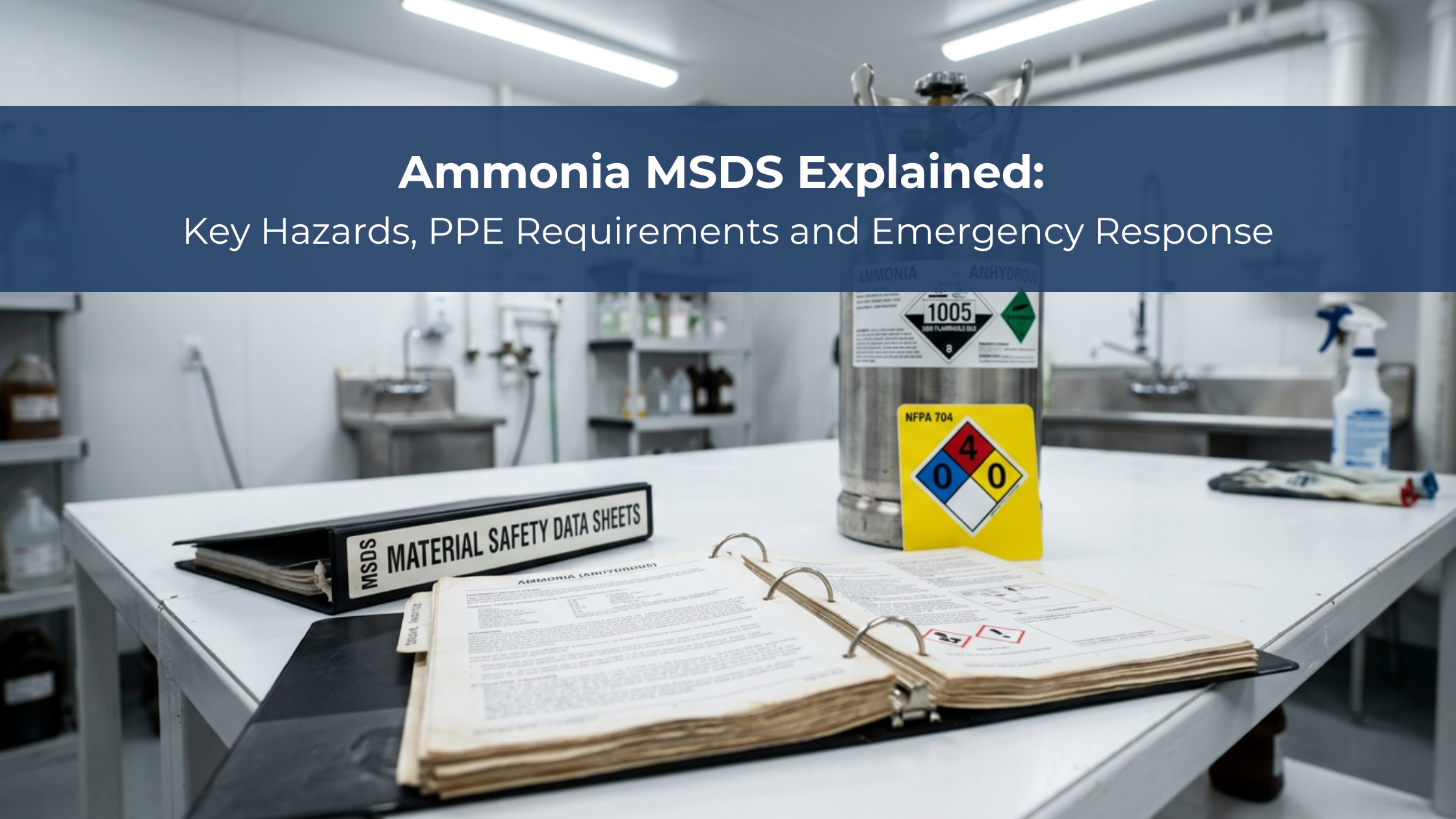
- MSDS vs SDS: The ammonia Material Safety Data Sheet (MSDS) is now aligned with the GHS 16-section SDS format under global harmonisation standards.
- IDLH Threshold: OSHA sets the Immediately Dangerous to Life and Health value for ammonia at 300 ppm.
- PPE is mandatory: Routine handling requires chemical splash goggles, ammonia-rated respirators, and neoprene or nitrile gloves at minimum.
- Dual hazard: Ammonia is both a health hazard and a conditionally flammable gas with an explosive range of 15 to 28 percent in air.
- Emergency response: A written Emergency Response Plan (ERP) aligned with the MSDS is required under OSHA PSM regulations for facilities storing more than 10,000 lbs of ammonia.
- Storage rules: Pressurised containers must not exceed 52 degrees Celsius and must be stored away from oxidisers, acids, and ignition sources.
- What Is an Ammonia MSDS?
- Physical and Chemical Properties
- Health Hazard Classification
- PPE Requirements for Ammonia Handling
- Regulatory Exposure Limits
- Storage and Handling Precautions
- Fire, Explosion, and Reactivity Data
- First Aid Measures by Exposure Route
- Spill and Accidental Release Procedures
- Who Uses the Ammonia MSDS?
- Related Reading
- Frequently Asked Questions
Every facility that handles, stores, or transports ammonia is legally required to maintain an up-to-date ammonia MSDS (Material Safety Data Sheet) accessible to all workers. Whether you are managing an industrial refrigeration plant, a fertiliser operation, or a water treatment facility, the MSDS is the foundation of your chemical safety programme. At Jaysons Chemical Industries, we supply ammonia products alongside comprehensive safety documentation to ensure our customers meet every compliance requirement. This guide decodes every section of the ammonia MSDS in plain language so your team knows exactly what it means and how to act on it. Explore our full range of ammonia products and support services designed around safe chemical management.
1. What Is an Ammonia MSDS?
A Material Safety Data Sheet is a structured document that summarises everything a worker, safety officer, or emergency responder needs to know about a chemical substance. For ammonia, this covers its molecular identity, physical dangers, health effects, safe use conditions, and emergency response procedures.
Under the OSHA Hazard Communication Standard (HCS 2012) and the United Nations Globally Harmonised System (GHS), the document is now formally called a Safety Data Sheet (SDS) and must follow a standardised 16-section format. However, the term MSDS remains widely used in industry and regulatory communications, particularly in older facilities and international trade documentation.
The 16 Sections of the Ammonia SDS
The GHS-aligned ammonia SDS covers: Identification, Hazard Identification, Composition, First Aid Measures, Fire-Fighting Measures, Accidental Release Measures, Handling and Storage, Exposure Controls and PPE, Physical and Chemical Properties, Stability and Reactivity, Toxicological Information, Ecological Information, Disposal Considerations, Transport Information, Regulatory Information, and Other Information.
Always verify that your ammonia MSDS is less than five years old and sourced directly from your supplier. Outdated sheets may not reflect current GHS classification updates or revised OSHA exposure limits.
2. Physical and Chemical Properties of Ammonia
Understanding ammonia’s physical characteristics is essential to interpreting its MSDS correctly and anticipating its behaviour during a release or spill event.
| Property | Value | Significance |
|---|---|---|
| Molecular Formula | NH3 | One nitrogen, three hydrogen atoms |
| Boiling Point | -33.35 °C | Rapidly vaporises at ambient temperatures |
| Vapour Pressure | 857 kPa at 20 °C | High pressure in closed containers |
| Vapour Density | 0.597 (air = 1) | Lighter than air; rises and disperses |
| Odour Threshold | 1-5 ppm | Detectable well below dangerous levels |
| Flammable Range | 15-28% in air | Narrow but real explosion risk |
| Auto-ignition Temp | 651 °C | High — not easily ignited by sparks alone |
Ammonia’s lighter-than-air vapour density means it will rise in open areas and accumulate in roof spaces, ventilation ducts, and elevated confined spaces. This behaviour directly informs detector placement and evacuation route planning, as discussed in detail on our ammonia gas leak detection systems page.
3. Health Hazard Classification
The ammonia MSDS classifies it as an acute inhalation hazard (Category 3), a skin corrosive (Category 1A), and a serious eye damage substance (Category 1) under GHS criteria. These classifications drive the signal word “DANGER” on product labels and require specific pictograms including the corrosion symbol, the exclamation mark, and the flame.
Routes of Exposure and Effects
Inhalation is the primary route of concern. At 25 ppm, the pungent odour becomes noticeable and irritating. At 50 ppm, immediate eye and respiratory irritation occurs. At 300 ppm, the OSHA IDLH threshold is reached. Above 1,000 ppm, severe pulmonary oedema may develop within minutes. Skin contact with anhydrous ammonia or concentrated ammonia solution causes immediate chemical burns due to the highly alkaline and hygroscopic nature of the compound. Eye contact can cause permanent corneal damage even at relatively low solution concentrations.
4. PPE Requirements for Ammonia Handling
Section 8 of the ammonia MSDS details exposure controls and personal protective equipment. Selecting the right PPE is not optional; it is a regulatory requirement under OSHA 29 CFR 1910.132 and a critical element of any safe ammonia handling programme. Our ammonia safety equipment guide provides a comprehensive breakdown of each category.
Respiratory Protection
For concentrations at or below 25 ppm, a half-face air-purifying respirator fitted with NIOSH-approved ammonia/methylamine cartridges is sufficient. For concentrations between 25 and 300 ppm, a full-face air-purifying respirator is required. Above 300 ppm or in unknown concentrations, a self-contained breathing apparatus (SCBA) in positive-pressure mode is mandatory. Supplied-air respirators are also acceptable as alternatives to SCBA for longer-duration exposures.
Eye and Face Protection
Chemical splash goggles with indirect ventilation are the minimum standard. For tasks involving pressurised systems, a full-face shield worn over goggles provides additional protection against sudden pressure releases.
Skin and Body Protection
Neoprene or nitrile rubber gloves with a minimum thickness of 0.4 mm are recommended. For tasks involving anhydrous ammonia under pressure, butyl rubber gloves offer superior permeation resistance. Depending on exposure risk, workers should wear chemical-resistant aprons, long-sleeved coveralls, and safety boots. Full body encapsulating suits are required for entry into areas where IDLH concentrations may be present.
Need Compliant Ammonia Products with Full Safety Documentation?
Jaysons Chemical Industries supplies anhydrous ammonia, liquor ammonia, and green ammonia with complete MSDS/SDS documentation, BIS compliance, and technical support.
5. Regulatory Exposure Limits
Multiple regulatory bodies publish occupational exposure limits (OELs) for ammonia. Your ammonia MSDS must reference the applicable limits for your jurisdiction.
| Authority | Limit Type | Value | Duration |
|---|---|---|---|
| OSHA (USA) | PEL (TWA) | 50 ppm | 8-hour shift |
| NIOSH (USA) | REL (TWA) | 25 ppm | 8-hour shift |
| NIOSH | STEL / Ceiling | 35 ppm | 15 minutes |
| ACGIH (TLV) | TWA | 25 ppm | 8-hour shift |
| ACGIH | STEL | 35 ppm | 15 minutes |
| OSHA (USA) | IDLH | 300 ppm | Immediate danger |
| India (MoEFCC) | National Ambient | 400 µg/m³ | Annual mean |
6. Storage and Handling Precautions
Section 7 of the ammonia MSDS is dedicated to safe handling and storage. For facilities managing both anhydrous ammonia and liquor ammonia, the requirements differ significantly and must be addressed separately within your safety management system.
Anhydrous Ammonia Storage
Anhydrous ammonia must be stored in pressure-rated cylinders or tonners, which must be kept upright, chained against falling, and stored in well-ventilated outdoor or purpose-built storage rooms. Containers must be kept away from heat sources, direct sunlight, and incompatible materials. The maximum storage temperature is 52 degrees Celsius. Refer to our page on anhydrous vs liquor ammonia storage requirements for a detailed comparison.
Liquor Ammonia Storage
Liquor ammonia, typically supplied as a 25 to 30 percent aqueous solution, is stored in polyethylene drums, IBCs, or stainless-steel tankers. Containers must be sealed tightly to prevent ammonia vapour release and stored in cool, shaded areas. Refer to our comprehensive storage procedures for liquor ammonia for step-by-step guidance.
7. Fire, Explosion, and Reactivity Data
Many users are surprised to find that ammonia appears in Section 5 (fire-fighting measures) of the MSDS. Although not classified as a highly flammable substance, ammonia can and does burn and explode under specific conditions that are commonly encountered in industrial settings.
Fire-Fighting Measures
Ammonia fires should be fought using dry chemical extinguishers or CO2. Water spray can be used to cool containers and disperse vapours but should not be directed at the liquid product as this can cause violent boiling and rapid vapour expansion. Fire-fighters must wear SCBA and full structural fire-fighting gear. If possible, cut off the gas supply at source before attempting to extinguish the flame.
Reactivity Hazards
Ammonia reacts violently with strong oxidisers, chlorine compounds, strong acids, and halogens. Contact with mercury, gold, silver, or their compounds can generate explosive products. These incompatibilities are critical for storage area segregation planning.
Never store ammonia cylinders near chlorine gas or bleach-based cleaning products. The reaction produces chloramines, which are highly toxic gases and can also trigger rapid ammonia combustion at elevated concentrations.
8. First Aid Measures by Exposure Route
Section 4 of the ammonia MSDS details first aid procedures. These must be posted visibly in all areas where ammonia is handled and reviewed regularly during safety training sessions. Our guide to handling liquor ammonia safely includes practical first aid reminders for field teams.
Inhalation
Move the affected person immediately to fresh air. If breathing is difficult, trained personnel should administer supplemental oxygen. If the person is not breathing, apply artificial respiration and call emergency services immediately. Do not give anything by mouth to an unconscious person. Seek immediate medical attention for any significant inhalation exposure.
Skin Contact
Remove contaminated clothing immediately, taking care not to contaminate the eyes. Flush affected skin with large volumes of clean water for at least 20 minutes. Do not attempt to neutralise with acid on the skin. Seek medical attention for any visible burns or blistering.
Eye Contact
Immediately flush eyes with a continuous stream of clean water for a minimum of 20 minutes while holding eyelids open. Remove contact lenses if present and if this can be done without delay. Seek immediate specialist ophthalmological attention as even brief high-concentration exposure can cause permanent corneal damage.
Ingestion
Ingestion of ammonia solution can cause severe burns to the mouth, throat, and oesophagus. Do not induce vomiting. Rinse mouth with water only if the person is conscious. Call emergency services and poison control immediately. Show the MSDS to the attending medical professional.
9. Spill and Accidental Release Procedures
Section 6 of the ammonia MSDS addresses accidental release measures. Having this section memorised and rehearsed through drills is the difference between a contained incident and a mass casualty event.
Immediate Response Steps
Activate the site emergency alarm system and evacuate all non-essential personnel to the upwind designated assembly point. Isolate the release area with a minimum 150-metre radius for a major anhydrous ammonia release. Notify local emergency services and the national chemical emergency hotline. Prevent gas from entering drains, sewers, or waterways. For large gas releases, water fog or water curtains can be used by trained responders wearing SCBA to knock down the vapour cloud.
Cleanup and Disposal
For liquid spills of ammonia solution, dilute with large volumes of water. The resulting dilute ammonia solution must be collected and disposed of in accordance with local environmental regulations. Never wash ammonia into storm drains. Engage a licensed hazardous waste contractor for large volume disposal. Refer to Section 13 of the SDS for specific disposal instructions applicable to your jurisdiction.
10. Who Uses the Ammonia MSDS?
The ammonia MSDS serves a diverse range of industries and professional roles. Understanding which sector you belong to helps you identify which sections of the MSDS are most critical for your daily operations.
- Agriculture and Fertiliser Manufacturing – Uses MSDS for field application safety and storage compliance
- Cold Storage and Industrial Refrigeration – Requires MSDS for OSHA PSM programme compliance
- Food Processing and Ice Plants – MSDS informs HACCP-aligned chemical safety plans
- Water and Wastewater Treatment – MSDS required for chemical dosing safety protocols
- Textile and Dyeing Industry – MSDS guides safe mixing and neutralisation procedures
- General Industrial Manufacturing – MSDS used for hazmat training and contractor management
Key Takeaways
- The ammonia MSDS/SDS is a 16-section legal document required under OSHA HCS and GHS regulations at every workplace that handles ammonia.
- The OSHA IDLH for ammonia is 300 ppm; concentrations above this require SCBA-level respiratory protection.
- PPE selection must be matched to the concentration and form (anhydrous gas vs. aqueous solution) of ammonia encountered.
- Storage segregation from oxidisers, acids, and halogens is non-negotiable and directly specified in the MSDS.
- First aid for eye contact requires 20 minutes of continuous water flushing and immediate specialist medical attention.
- Spill response must include upwind evacuation, prevention of waterway contamination, and vapour knockdown using water fog with full SCBA.
- Regular MSDS review and worker training drills translate the document from paper compliance into life-saving action.
Frequently Asked Questions
What does MSDS stand for in the context of ammonia?
MSDS stands for Material Safety Data Sheet. It is a standardised document providing detailed information about a chemical substance including its hazards, safe handling practices, storage conditions, PPE requirements, and emergency response procedures. In newer regulatory frameworks it is referred to as an SDS (Safety Data Sheet) under the GHS system. Both terms refer to the same type of document and are used interchangeably across industries.
What are the primary health hazards listed in the ammonia MSDS?
The primary health hazards include severe respiratory tract irritation, chemical burns to eyes and skin, pulmonary oedema at high concentrations, and potential asphyxiation in enclosed spaces. The IDLH (Immediately Dangerous to Life and Health) value for ammonia is 300 ppm. Chronic low-level exposure may cause persistent respiratory sensitisation in some individuals.
What PPE does the ammonia MSDS require for routine handling?
For routine handling, the ammonia MSDS recommends chemical splash goggles, a full-face respirator with ammonia cartridges or SCBA for high concentrations, neoprene or nitrile gloves, and a chemical-resistant apron or full body suit depending on the exposure level. The exact PPE tier must match the anticipated atmospheric concentration of ammonia in the work area.
At what concentration does ammonia become immediately dangerous?
The OSHA IDLH for ammonia is 300 ppm. The NIOSH recommended exposure limit (REL) ceiling is 35 ppm over a 15-minute period. At concentrations above 1,000 ppm, ammonia causes severe respiratory distress, and above 5,000 ppm it can be fatal within minutes. Continuous gas monitoring is therefore critical in all enclosed ammonia-handling areas.
What is the correct first aid response for ammonia eye contact?
Immediately flush eyes with large quantities of clean water for a minimum of 20 minutes while holding eyelids open. Remove contact lenses if present and if this can be done without delay. Seek immediate medical attention as ammonia can cause severe chemical burns to the cornea that may result in permanent vision impairment.
Is ammonia flammable according to its MSDS?
Ammonia is classified as a flammable gas with a narrow explosive range of 15 to 28 percent by volume in air. It requires relatively high ignition energy but will burn and potentially explode under the right concentration conditions. It is not considered highly flammable under typical ambient conditions but presents a real fire and explosion risk in confined spaces with ignition sources present.
How should an ammonia spill be cleaned up according to the MSDS?
Evacuate non-essential personnel and ensure adequate ventilation. Wear full SCBA and chemical-resistant protective clothing. For liquid spills, dilute with large amounts of water. For gas releases, use water spray or fog to absorb and disperse vapours. Neutralise residual liquid with dilute acid such as citric acid or vinegar if required. Consult local environmental regulations before disposal and engage a licensed contractor for large-volume spills.
What storage conditions does the ammonia MSDS specify?
The MSDS specifies storage in cool, well-ventilated areas away from heat sources and open flames. Cylinders and tonners must be stored upright, secured against falling, and segregated from oxidisers, acids, and halogens. Storage temperatures must not exceed 52 degrees Celsius for pressurised containers. Storage areas must be fitted with ammonia gas detection systems, emergency eyewash stations, and safety showers.