
Key Highlights A Certificate of Analysis (COA) reports actual test results for the specific batch of ammonia you are receiving, not general product specifications. Anhydrous ammonia COAs should report NH3 purity, moisture and oil content, while liquor ammonia COAs...
Guide and Tips
Anhydrous Ammonia vs Liquor Ammonia: Which Should You Buy? | Jaysons Chemical Industries
Key Highlights Anhydrous ammonia is pure NH3 stored as a liquefied gas under pressure, with no water content. Liquor ammonia, also called aqua ammonia or ammonium hydroxide, is NH3 dissolved in water at roughly 20 to 30 percent strength. Anhydrous ammonia typically...
Ammonia Supplier Red Flags: 12 Warning Signs of an Unverified Vendor
Key Highlights Unverified ammonia vendors typically fail on three fronts: missing statutory licenses, inconsistent batch documentation, and unrealistic pricing. A valid PESO license is mandatory for any entity storing, handling, or transporting industrial ammonia in...
How to Verify an Ammonia Supplier’s PESO License and Compliance Status
Key Highlights PESO, the Petroleum and Explosives Safety Organisation, licenses the storage, filling and transport of hazardous gases like ammonia in India. Different PESO rules apply to bulk pressure vessels, gas cylinders and mobile transport, so one license does...
Choosing the Right Ammonia Grade for Your Industry: A Decision Framework
Key Highlights Ammonia is supplied in several distinct grades, including anhydrous, aqueous or liquor, technical, and green ammonia, each suited to different processes. Grade selection depends on purity requirement, storage infrastructure, batch volume, transport...
How to Choose an Ammonia Supplier in India: The Complete Buyer’s Guide (2026)
Key Highlights Grade specification is the first decision: anhydrous ammonia and liquor ammonia serve very different industrial applications and have distinct storage and safety requirements. Every ammonia supplier in India must hold valid PESO licences for storage,...
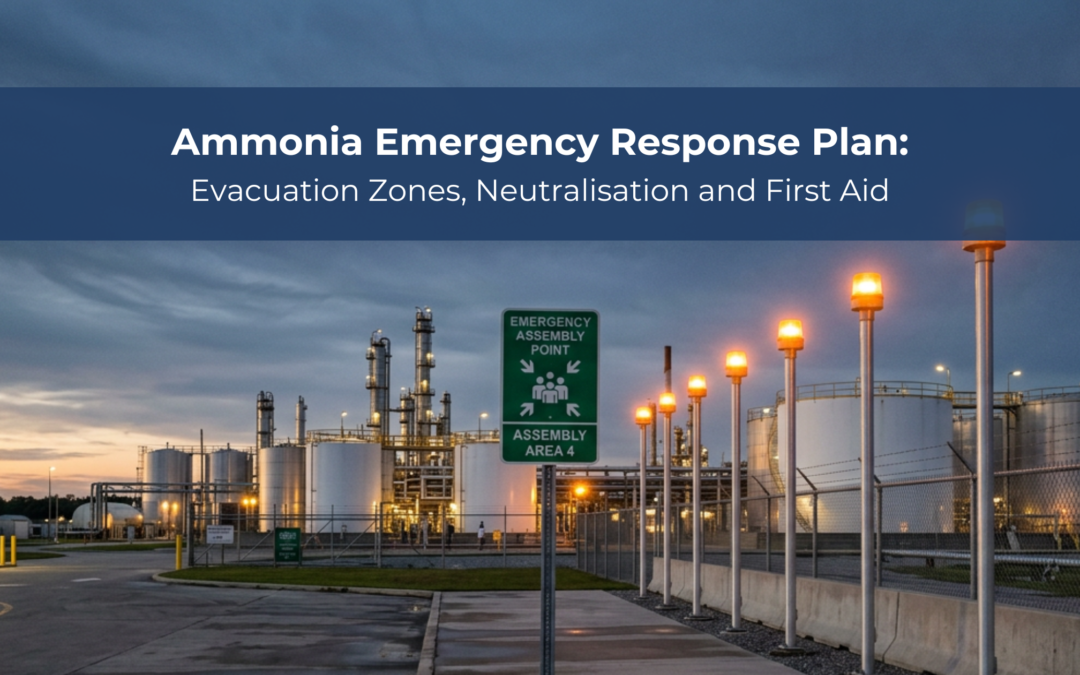
Ammonia Emergency Response Plan: Evacuation Zones, Neutralisation and First Aid
Key Highlights Legal requirement: An ammonia ERP is mandatory under OSHA PSM for facilities with more than 10,000 lbs of ammonia and under MSIHC Rules 1989 in India for major hazard installations. Zone-based evacuation: Isolation distances range from 30 metres for...
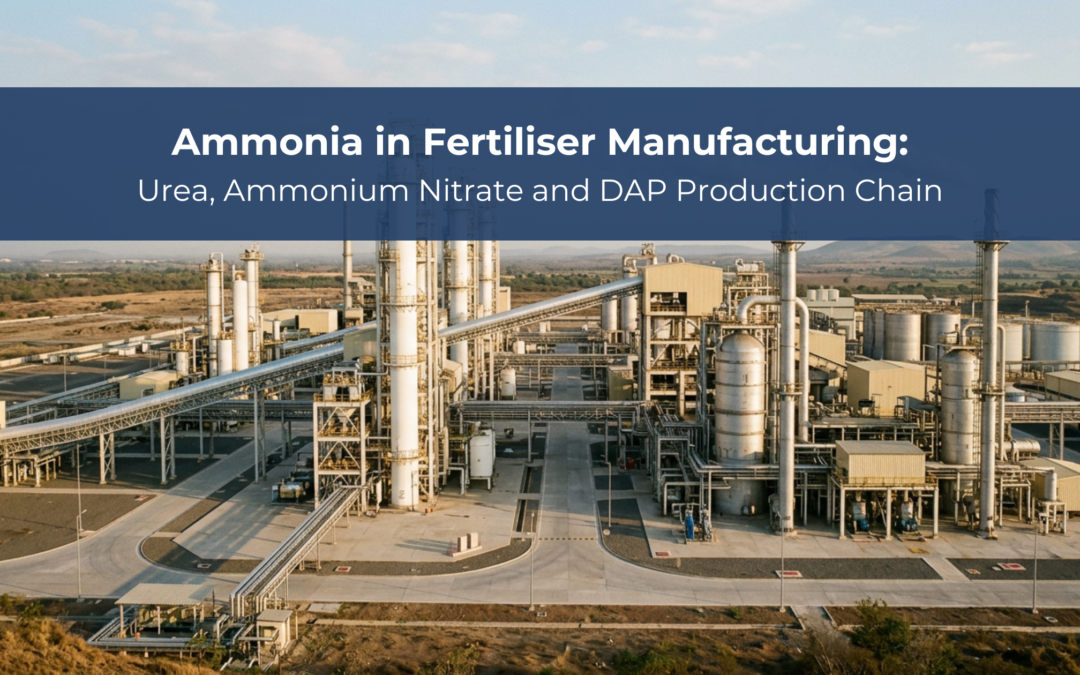
Ammonia in Fertiliser Manufacturing: Urea, Ammonium Nitrate and DAP Production Chain
Key Highlights Ammonia is the foundation: All major nitrogen fertilisers including urea, ammonium nitrate, and DAP are produced from ammonia as the primary nitrogen source. Scale of impact: Approximately 80 percent of globally produced ammonia is used for fertiliser...
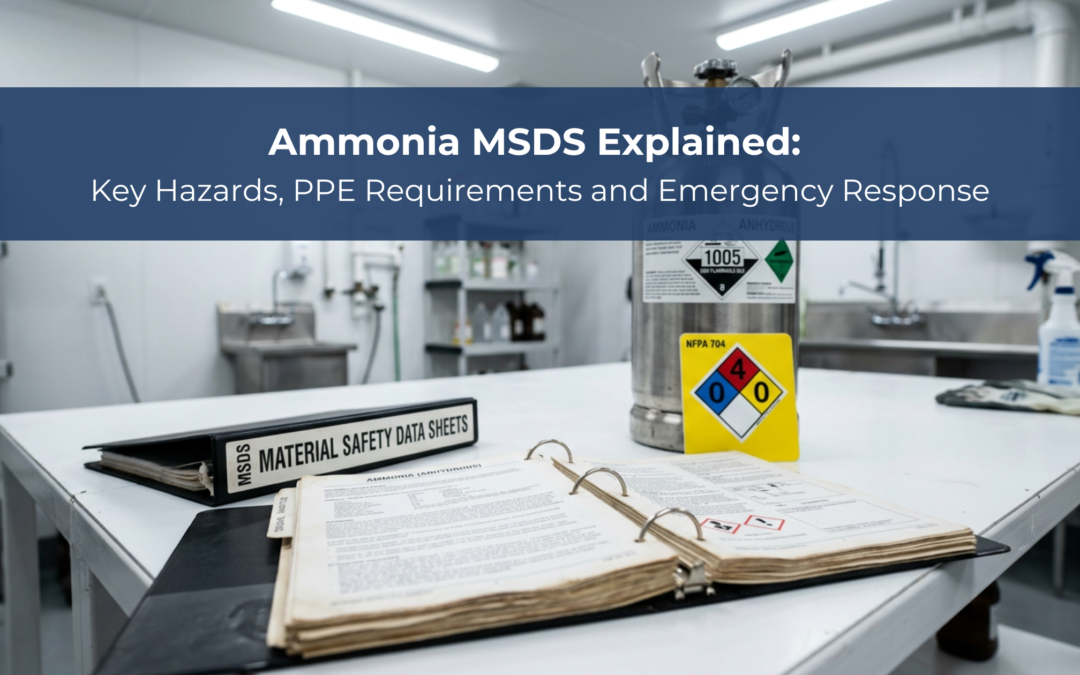
Ammonia MSDS Explained: Key Hazards, PPE Requirements and Emergency Response
Key Highlights MSDS vs SDS: The ammonia Material Safety Data Sheet (MSDS) is now aligned with the GHS 16-section SDS format under global harmonisation standards. IDLH Threshold: OSHA sets the Immediately Dangerous to Life and Health value for ammonia at 300 ppm. PPE...
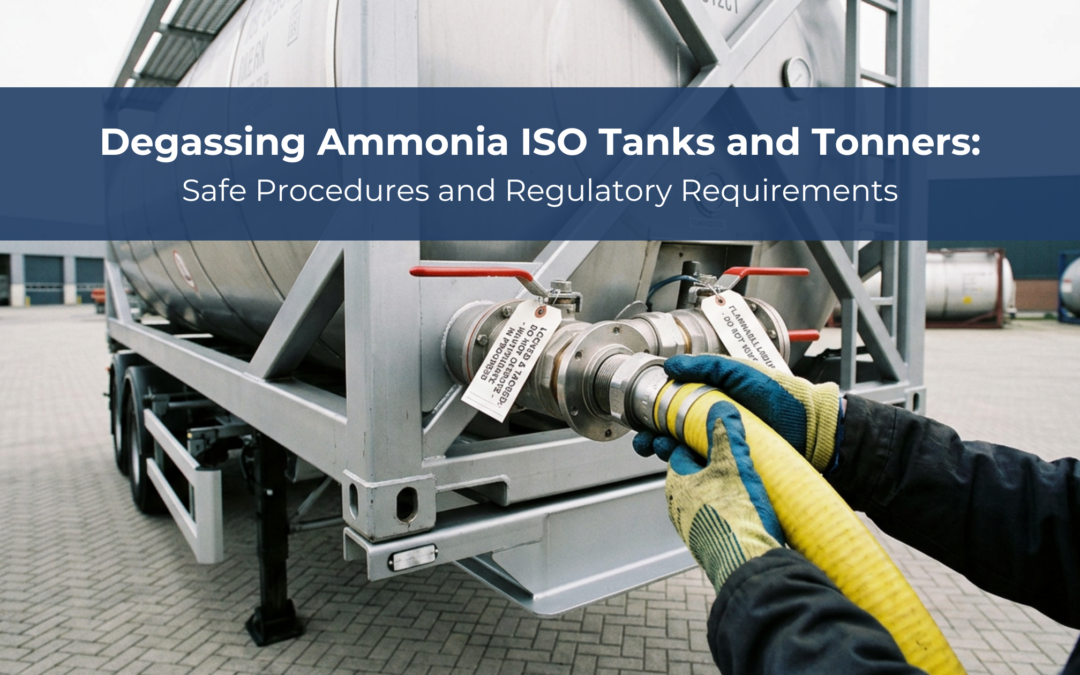
Degassing Ammonia ISO Tanks and Tonners: Safe Procedures and Regulatory Requirements
Key Highlights Definition: Degassing removes all residual ammonia from cylinders, tonners, and ISO tanks before maintenance, inspection, hot work, or disposal as empty vessels. Primary methods: Water scrubbing, nitrogen purging, and caustic scrubbing — water scrubbing...
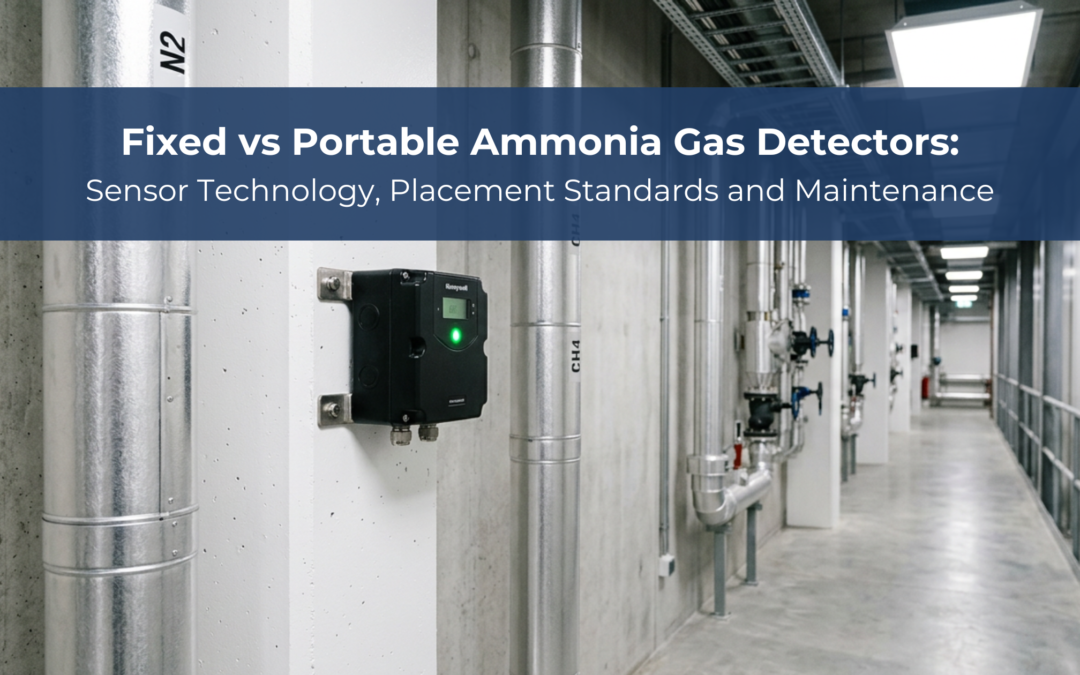
Fixed vs Portable Ammonia Gas Detectors: Sensor Technology, Placement Standards and Maintenance
Key Highlights Two system types: Fixed detectors provide continuous area monitoring; portable detectors protect individual workers and support maintenance inspections. Sensor choice matters: Electrochemical sensors offer the best low-level sensitivity (0-500 ppm);...
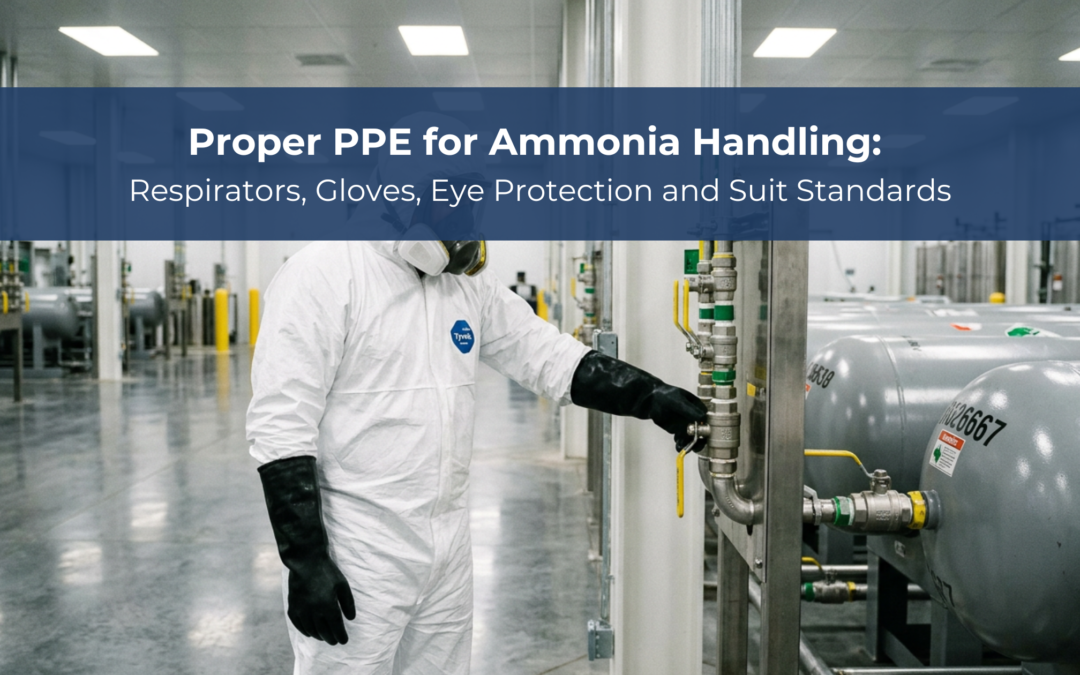
Proper PPE for Ammonia Handling: Respirators, Gloves, Eye Protection and Suit Standards
Key Highlights Concentration-matched PPE: Respiratory protection must be escalated from half-face APR to full-face APR to SCBA as ammonia concentration increases through 25, 50, and 300 ppm thresholds. Glove material matters: Butyl rubber outperforms neoprene and...
How to Obtain a PESO License for Ammonia Storage in India: Application Process, Documents and Timeline
Key Highlights All pressure vessels storing ammonia above 1,000 litres in India require a valid PESO licence before commissioning. The PESO application involves pre-approval design review, fabrication inspection, hydrostatic testing, site inspection and final licence...
Ammonia Liquefaction Plant Design: Compressor Selection, Heat Exchange and Storage Specification
Key Highlights Compressor selection governs capital cost, energy consumption and plant reliability in ammonia liquefaction. Shell and tube and evaporative condensers each suit different climatic and throughput conditions. Storage vessel design must comply with IS...
Ammonia Cylinder and Tonner Maintenance: Hydrostatic Testing, Valve Care and Requalification
Key Highlights Ammonia cylinders must undergo hydrostatic testing every five years under the Gas Cylinders Rules 2016 in India. Hydrostatic test pressure is 1.5 times the working pressure; cylinders failing expansion limits must be condemned. Valve inspection and...
Liquor Ammonia Concentration Grades: Commercial, AR and LR — Technical Comparison
Key Highlights Liquor ammonia is available in three primary grades in India: Commercial (20 to 26 percent), LR (25 to 30 percent) and AR (28 to 30 percent). AR grade meets Analytical Reagent specifications with strict limits on heavy metals, iron, chloride and...
Anhydrous Ammonia for SCR DeNOx Systems: Specification, Dosing and Storage Requirements
Key Highlights SCR DeNOx systems require anhydrous ammonia at a minimum purity of 99.5 percent by weight conforming to IS 1588. The stoichiometric molar ratio of NH3 to NOx is 1:1; operating NSR is typically controlled between 0.95 and 1.05. Ammonia slip must be kept...
Technical Grade vs Refrigerant Grade Anhydrous Ammonia: What Buyers Must Know
Key Highlights Refrigerant grade anhydrous ammonia (R-717) must meet a minimum purity of 99.98%, versus 99.5% for technical grade. Water content limits are typically 33 ppm for refrigerant grade versus up to 300 ppm for technical grade. Oil content and residue on...
Anhydrous Ammonia Price in India: Factors That Drive Market Rates
Key Highlights Natural gas feedstock, which represents 70-80% of variable production cost, is the single largest driver of anhydrous ammonia prices in India. Global ammonia supply and demand balance, influenced by production outages and agricultural demand cycles,...
Anhydrous Ammonia Cylinder vs Tonner vs Road Tanker: Packaging Selection Guide
Key Highlights Cylinders (33-100 kg), tonners (800-1,200 kg) and road tankers (10-22 MT) serve different consumption scales for anhydrous ammonia. All three formats require PESO compliance; road tanker movements need ADG route permits. Cylinders suit laboratories and...
Neutralizing Ammonia Gas: The Power of Wet Scrubbers
Ammonia gas may not be a topic that comes up in everyday conversation, but its impact on our health and the environment cannot be ignored. Understanding the chemical properties of ammonia gas and the risks it poses is crucial in...

Ammonia in Textile and Dyeing Industries: Complete Industry Guide (2026)
Key Highlights Annual consumption: India's textile industry uses an estimated 45,000–60,000 MT of ammonia each year across dyeing, scouring, finishing, and mercerisation operations. Dominant form: Liquor ammonia (20–28% aqueous solution) accounts for the majority of...
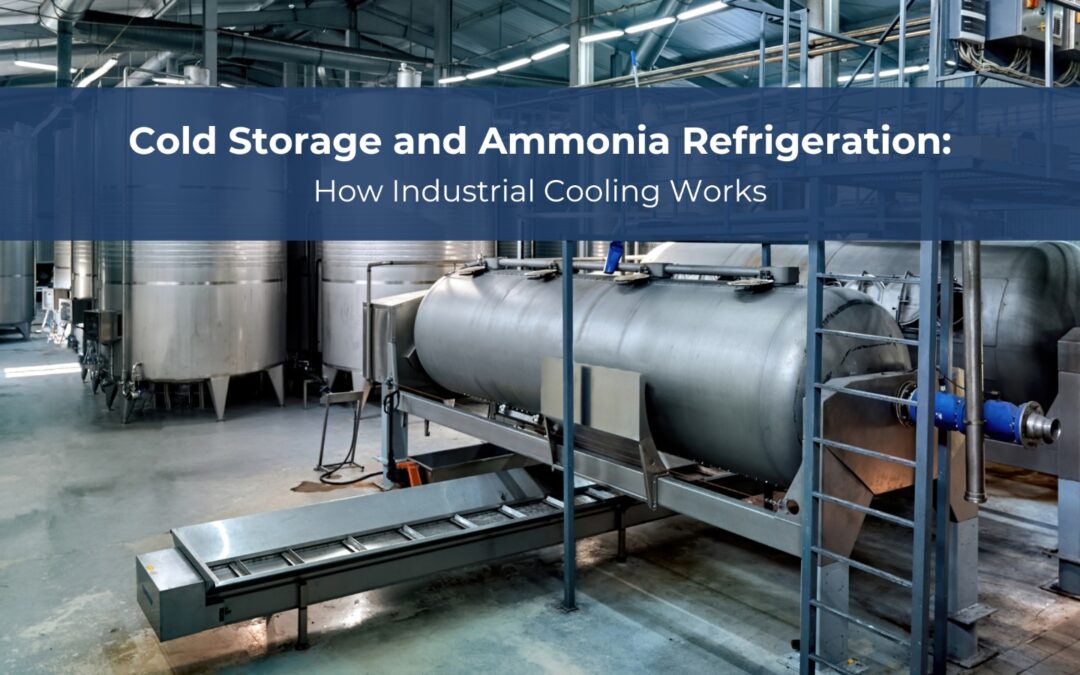
Cold Storage and Ammonia Refrigeration: How Industrial Cooling Works (2026)
Key Highlights Market scale: India has over 8,000 registered cold storage facilities with combined capacity exceeding 37 million MT — the majority using ammonia refrigeration. Energy advantage: Ammonia refrigeration systems deliver 10–20% better energy efficiency than...
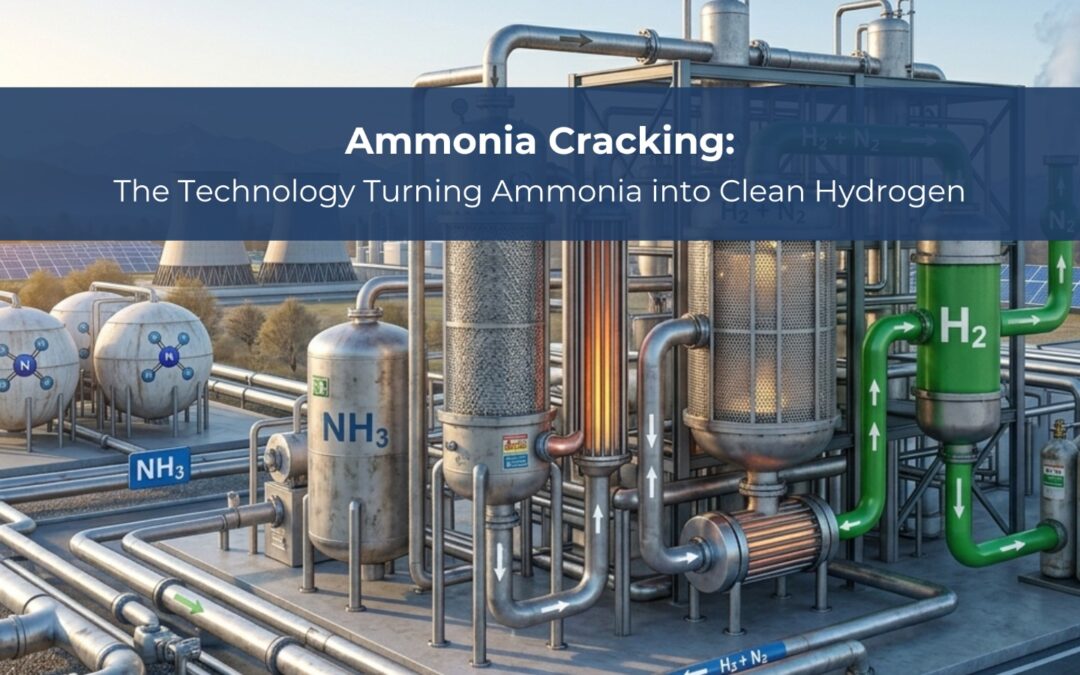
Ammonia Cracking: The Technology Turning Ammonia Into Clean Hydrogen (2026)
Key Highlights Core reaction: Ammonia cracking (2NH3 → N2 + 3H2) splits ammonia into nitrogen and hydrogen using heat and a catalyst, producing zero carbon emissions when green ammonia is the feedstock. Hydrogen content: Ammonia contains 17.6% hydrogen by weight —...
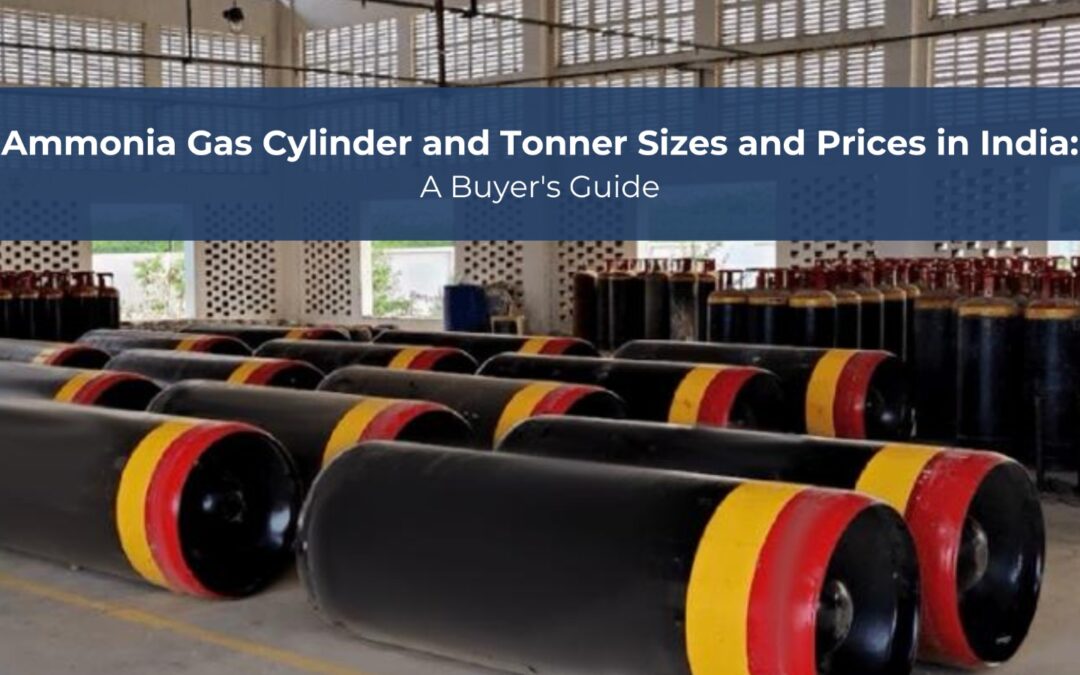
Ammonia Cylinder and Tonner Sizes and Prices in India: Buyer’s Guide (2026)
Key Highlights Standard sizes: Indian market ammonia cylinders are available in 47 kg, 100 kg, and 150 kg net fill capacities, all manufactured to IS 7285 / IS 5765 BIS specifications. Tonner capacity: Ammonia tonners hold 900–1,000 kg of anhydrous ammonia and are the...
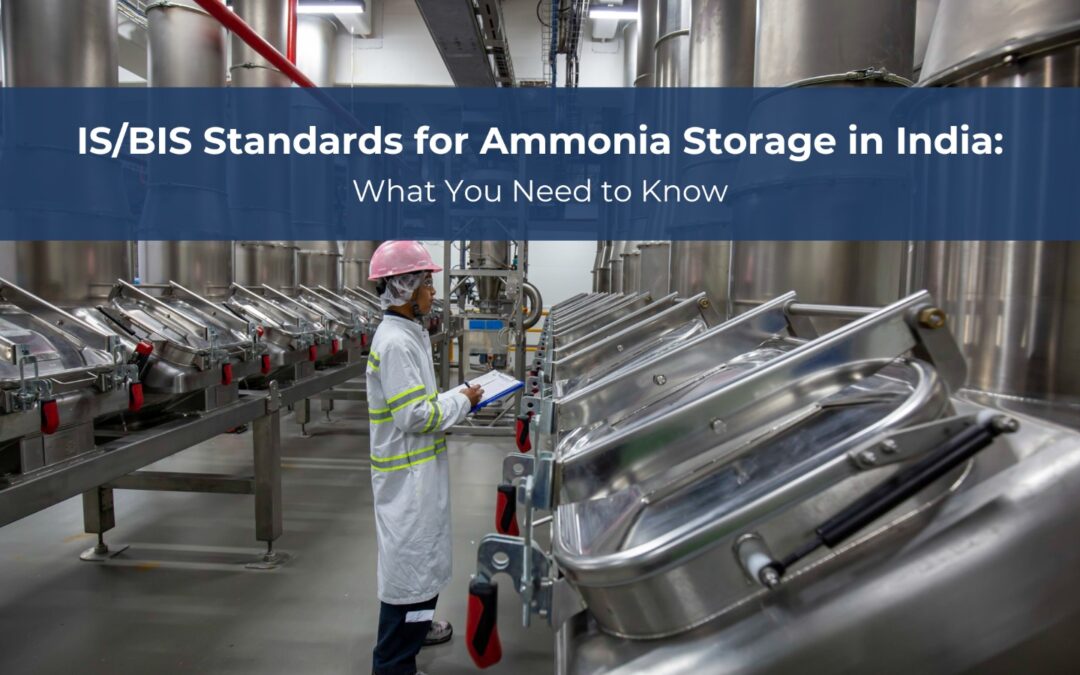
IS/BIS Standards for Ammonia Storage in India: Complete Compliance Guide (2026)
Key Highlights Primary quality standard: IS 5116 specifies anhydrous ammonia purity (99.95% minimum); IS 6099 covers liquor ammonia grades used in industry. Regulatory authority: PESO issues and enforces storage licences under the Gas Cylinders Rules 2016 — applicable...

Ammonia in Food Processing: Cold Chains, Ice Plants and Preservation (2026)
Key Highlights Scale of use: India operates over 7,500 registered cold stores and thousands of ice plants — the vast majority using ammonia as the primary refrigerant. Energy advantage: Ammonia refrigeration delivers 10–20% better energy efficiency than equivalent HFC...
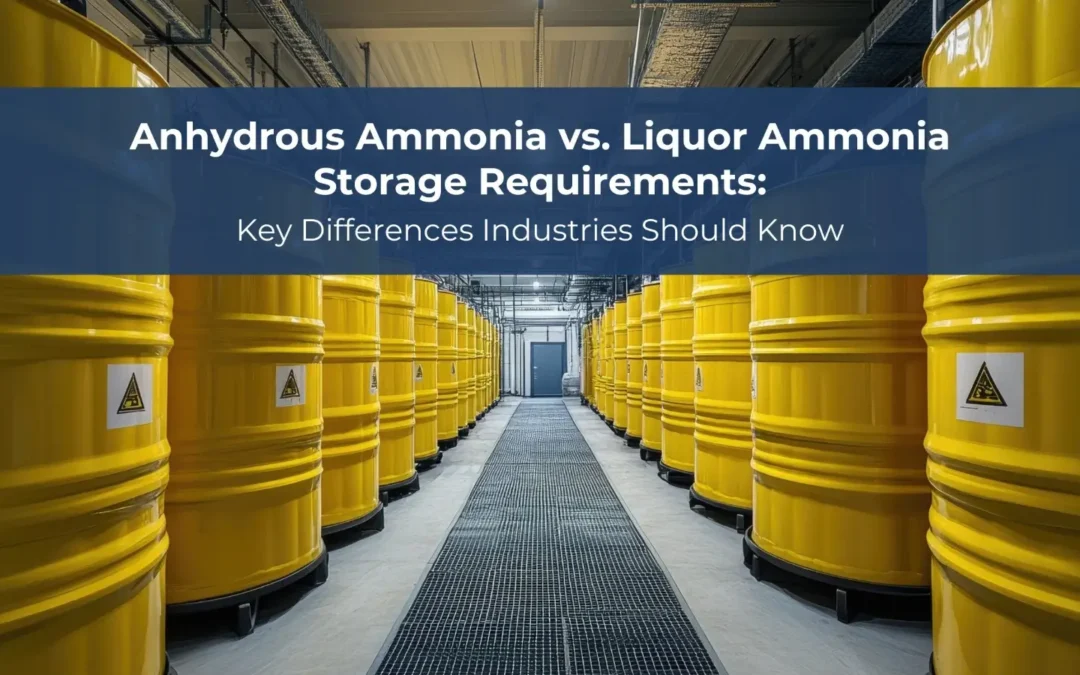
Anhydrous vs Liquor Ammonia Storage Requirements: Key Differences for Indian Industry (2026)
Key Highlights Fundamental difference: Anhydrous ammonia requires pressure vessel storage (7–10 bar at ambient temperature); liquor ammonia can be stored in atmospheric HDPE or SS tanks — the single biggest difference driving all other storage requirement variations....
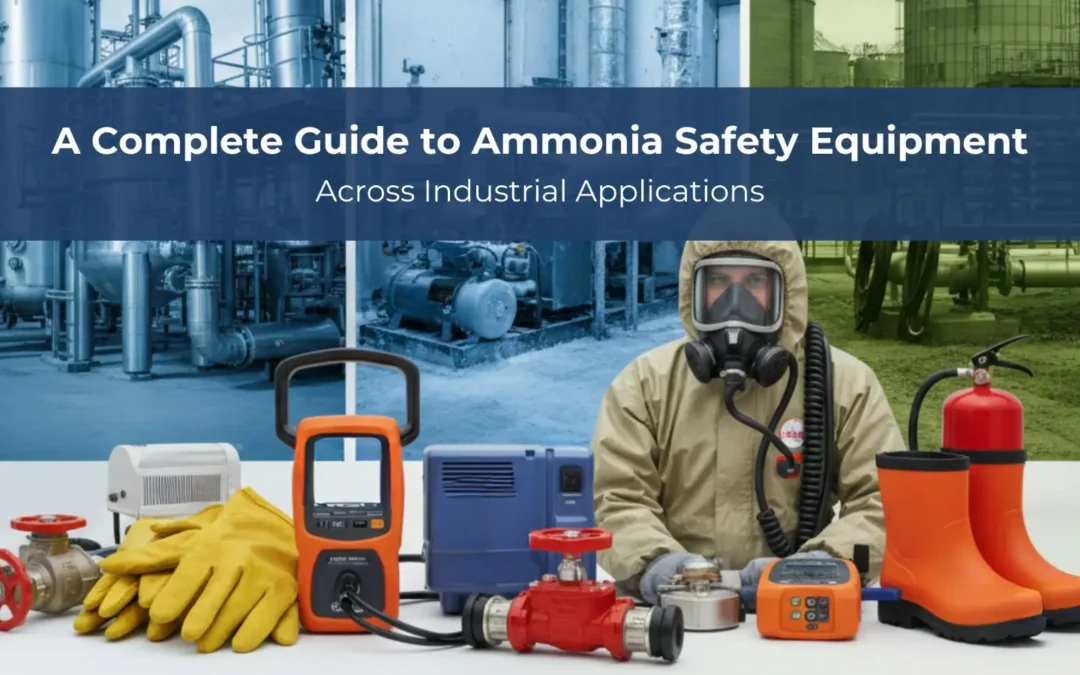
Complete Guide to Ammonia Safety Equipment for Industrial Applications (2026)
Key Highlights Mandatory PPE: Full-face respirator with ammonia cartridges (or SCBA at/above 300 ppm IDLH), butyl rubber gloves, chemical-resistant apron/suit, and splash goggles are the minimum for any anhydrous ammonia handling. Gas detection: Fixed electrochemical...

Ammonia Gas in Clean Energy Generation: Power Plants, SCR, and the Hydrogen Economy (2026)
Key Highlights SCR DeNOx today: Ammonia is already critical to Indian power plants for Selective Catalytic Reduction (SCR) — reducing NOx emissions to meet CPCB standards across India's ~200 GW coal fleet. Co-firing potential: Japan has demonstrated 20% ammonia...
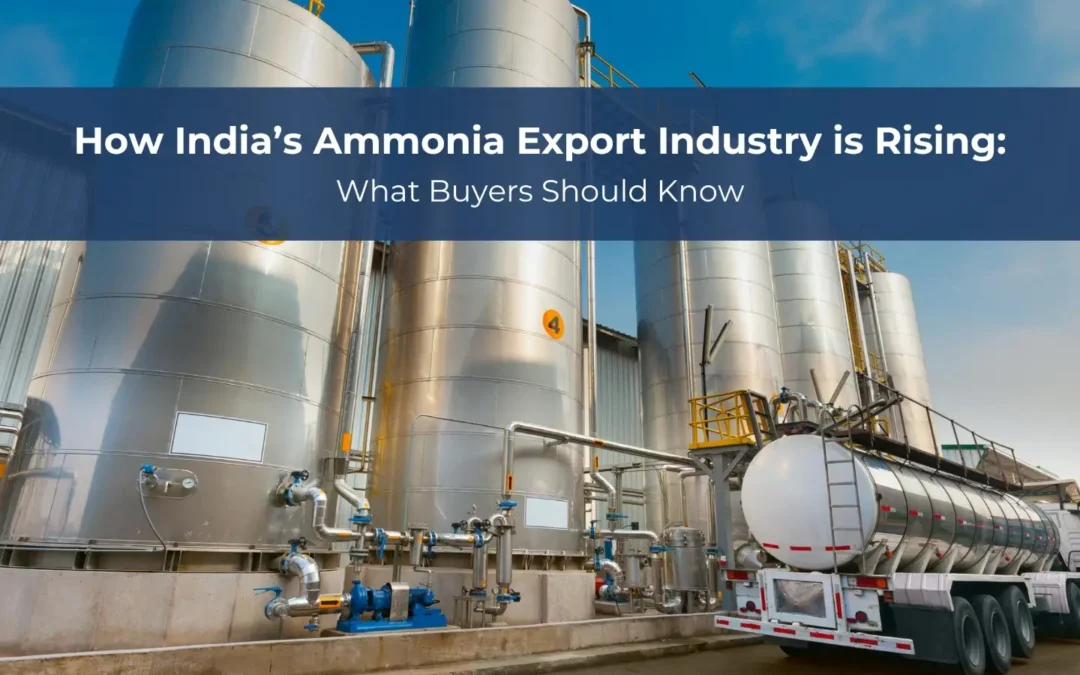
India’s Ammonia Export Industry: Market Trends, Buyer Insights and Future Outlook (2026)
Key Highlights Export trajectory: India currently exports modest quantities of conventional ammonia regionally but is building toward major green ammonia export volumes through the late 2020s and 2030s. Production capacity: India's ~30 ammonia plants produce...
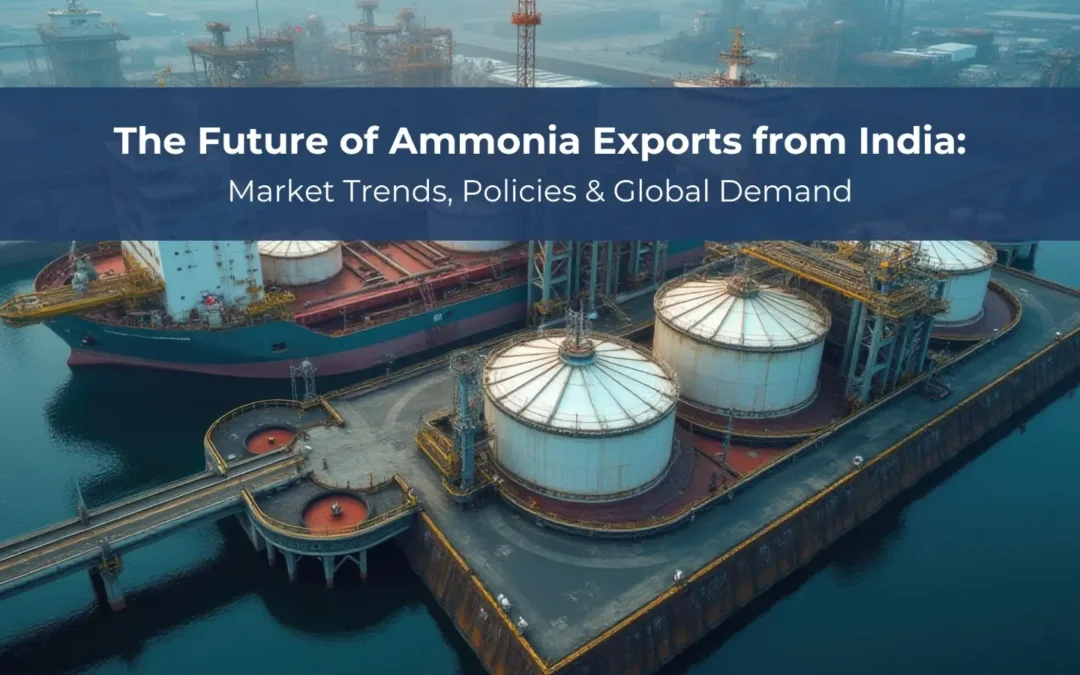
Green Ammonia Transporters in India: Export Growth, Logistics and Market Trends (2026)
Key Highlights Strategic position: India's combination of low-cost renewable energy, existing ammonia logistics infrastructure, and coastal port access positions it as a potential leading green ammonia exporter to Japan, South Korea, and Europe. Domestic transport:...
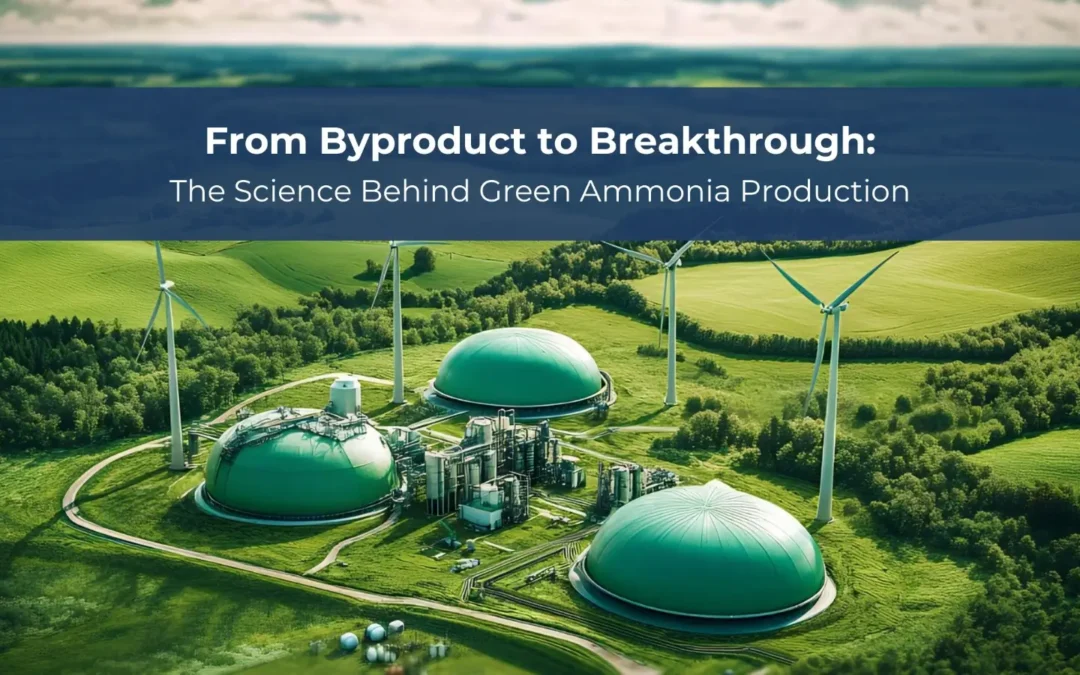
Green Ammonia Production: The Science Behind Renewable Synthesis (2026)
Key Highlights Three steps: Green ammonia is made by combining water electrolysis (producing green H2), air separation (producing N2), and Haber-Bosch synthesis (combining H2 + N2 → NH3) — all powered by renewable electricity. Electricity requirement: Approximately...
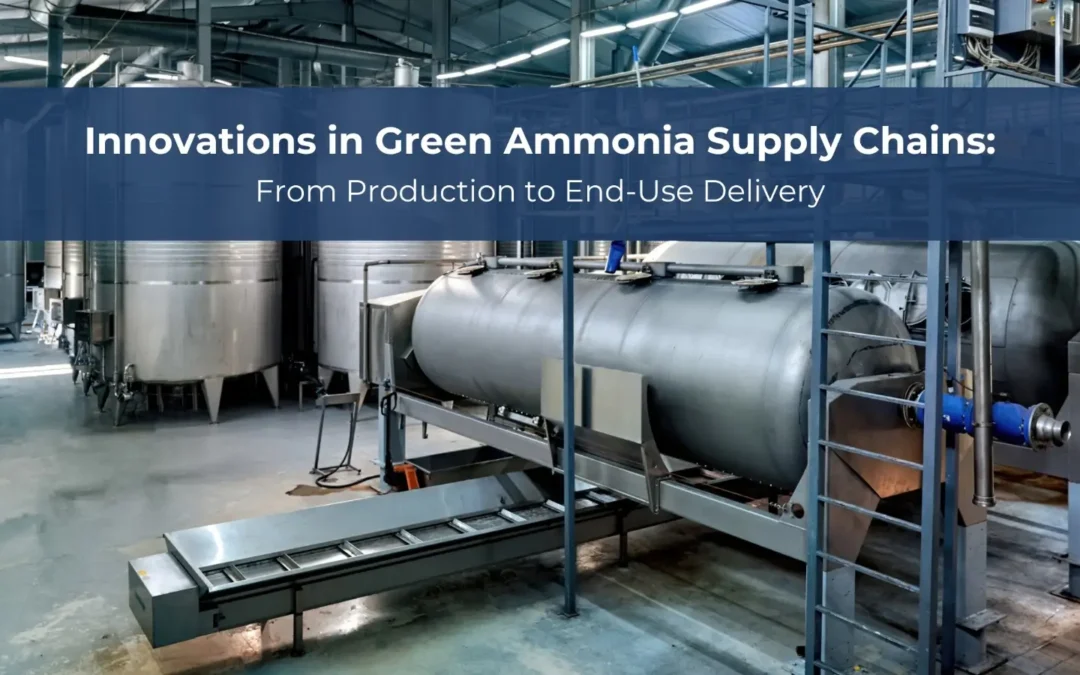
Innovations in Green Ammonia Supply Chains: Production, Storage, Transport and End-Use (2026)
Key Highlights Cost trajectory: Green ammonia production costs are projected to decline from USD 600–900/tonne today to USD 300–500/tonne by 2030 in favourable renewable locations — driven by electrolyser cost reductions and cheaper renewable electricity. Electrolyser...

Green Ammonia Transporters in India: Driving a Clean Energy Revolution
Key Highlights Same physical handling as grey ammonia: Green ammonia is chemically identical to conventional ammonia — the same PESO regulations, UN numbers, tanker specifications, and safety protocols apply to both. Chain-of-custody certification is the difference:...
Green Ammonia vs Blue Ammonia: Key Differences, Carbon Footprints and Future Outlook (2026)
Key Highlights Core difference: Green ammonia uses electrolytic hydrogen from renewable electricity (near-zero CO2); blue ammonia uses SMR hydrogen from natural gas with CO2 captured and stored via CCS. Carbon footprints: Grey ~1.9 tonne CO2/tonne NH3; blue ~0.2–0.4;...

The Role of Green Ammonia in Decarbonizing the Shipping Industry
Key Highlights IMO 2050 net-zero mandate: The IMO's 2050 net-zero shipping target cannot be met with fossil fuels — zero-carbon fuels including green ammonia are the only viable pathways, making adoption a regulatory necessity. Carbon-free combustion: Ammonia contains...

Green Ammonia: The Clean Energy Fuel Transforming Global Sustainability Goals
Key Highlights Zero-carbon production: Green ammonia is produced using renewable electricity and electrolytic hydrogen — generating near-zero greenhouse gas emissions versus 1.5-1.8 tonnes CO2 per tonne for conventional grey ammonia. Dual sustainability role: Green...
Anhydrous Ammonia: The Industrial Workhorse Powering Agriculture and Manufacturing
Key Highlights Foundation of food security: Ammonia-derived synthetic nitrogen fertilisers support approximately 50% of global food production — without them, the current world population could not be fed. Urea dominates in India: Urea (46% N, produced from anhydrous...

Top Industrial Applications of Anhydrous Ammonia in India
Anhydrous ammonia, a colorless gas with a pungent odor, is one of the most widely used industrial chemicals globally—and India is no exception. Its high nitrogen content and reactive nature make it valuable across a wide range of sectors, from agriculture and...
Safety First: How to Store and Transport Anhydrous Ammonia Safely
Key Highlights Pressure vessel requirement: Anhydrous ammonia must be stored in PESO-registered pressure vessels compliant with IS 2825, with valid inspection certificates from PESO-recognised competent persons. 85% maximum fill: Storage vessels must never be filled...
Use of Liquor Ammonia in Copper Etching: A Comprehensive Overview
Key Highlights Alkaline mechanism: Liquor ammonia etches copper by forming soluble copper-ammine complexes — a fundamentally different mechanism from acid etching, offering better selectivity and compatibility with tin-lead resists. PCB manufacturing standard:...

The Future of Ammonia Trade: Trends and Innovations from India
Key Highlights Market growth: Global ammonia market exceeds USD 75 billion and is projected to grow 4-6% annually under conventional demand, with significantly higher growth if green ammonia adoption accelerates. Energy carrier opportunity: Ammonia as a hydrogen...
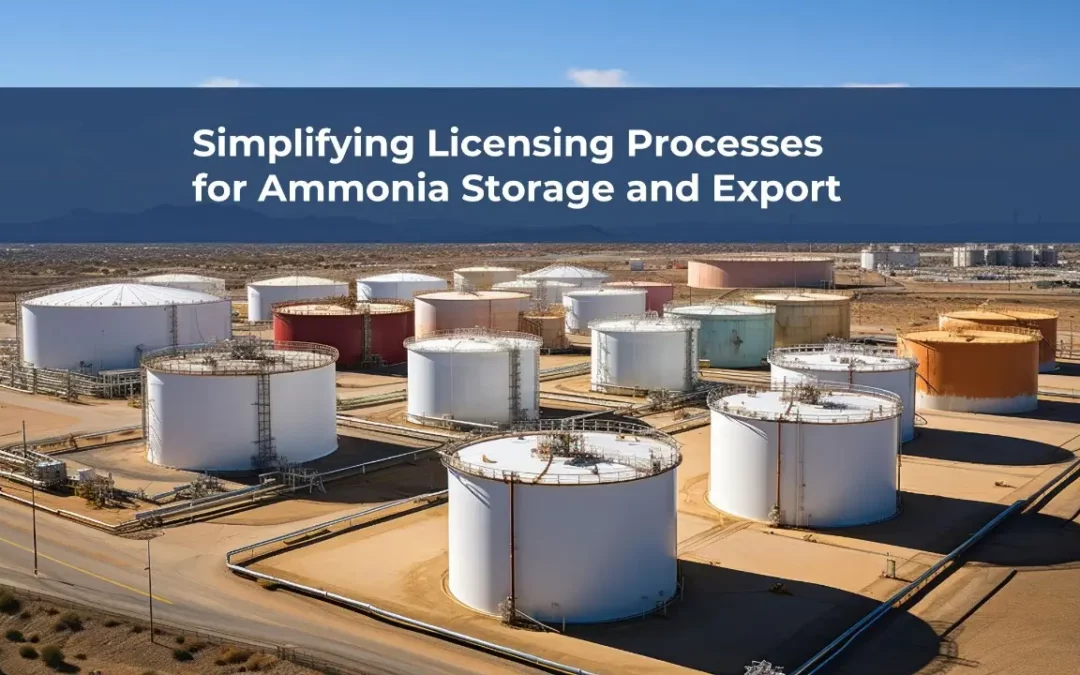
Simplifying Licensing Processes for Ammonia Storage and Export
Key Highlights Multiple licences required: Ammonia storage in India requires concurrent PESO licences, PCB consent to establish and operate, factory licence, fire NOC, and local authority NOC — each from a different authority. MAH threshold at 150 tonnes: Facilities...
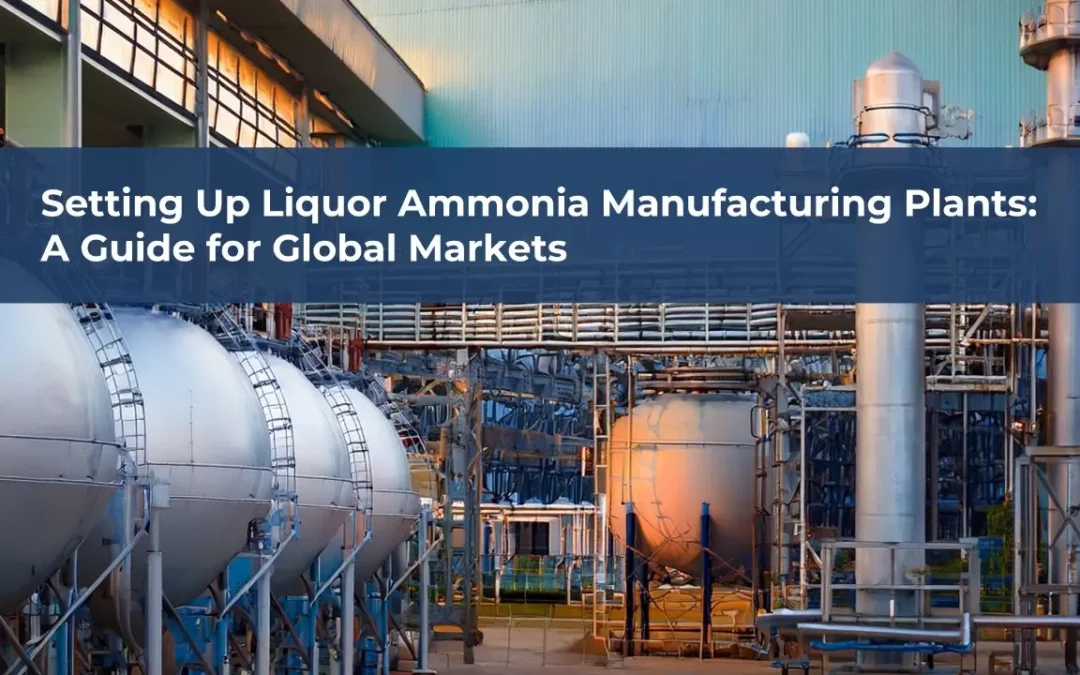
Setting Up Liquor Ammonia Manufacturing Plants: A Guide for Global Markets
Key Highlights Key licences: PESO (longest lead time — 3–6 months), Factory licence, MSIHC compliance, State PCB air consent — all needed before first production. Core process: Absorption column + cooling system + DM water + concentration control + vent scrubber — the...
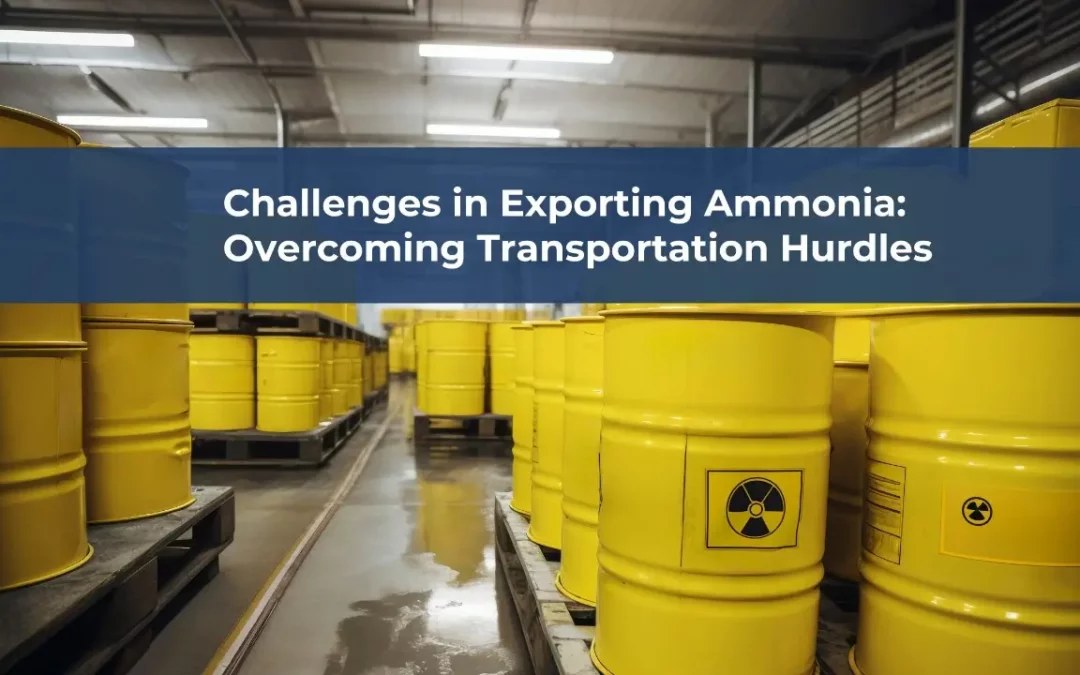
Challenges in Exporting Ammonia: Overcoming Transportation Hurdles
Key Highlights Layered compliance: Indian exporters must navigate PESO/domestic regulations + IMDG Code + destination country import rules — simultaneously and correctly. Shipping line acceptance: Anhydrous ammonia (Class 2.3) faces the most restrictions; liquor...
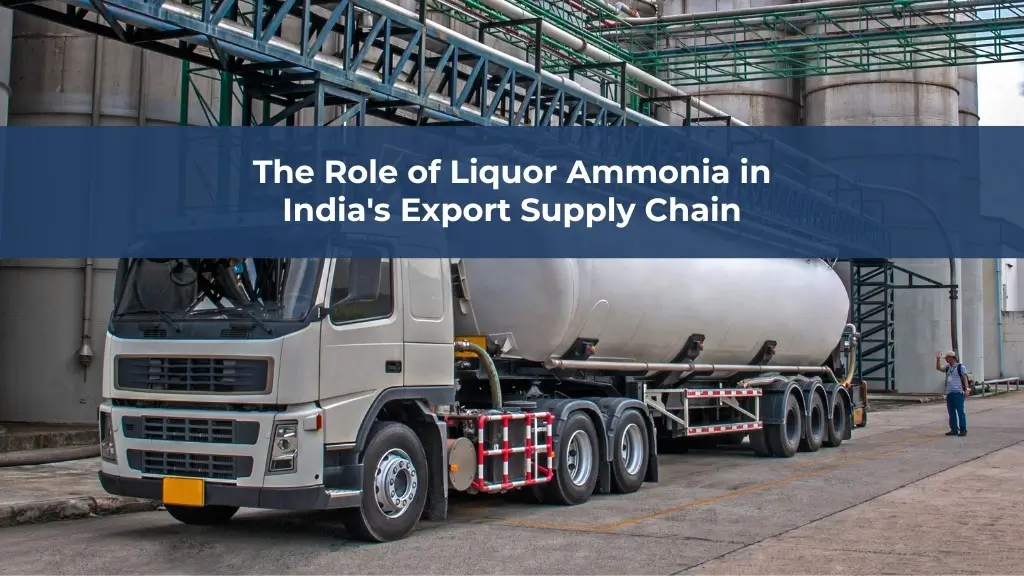
The Role of Liquor Ammonia in India’s Export Supply Chain
Key Highlights India leads globally: India is the world's largest exporter of liquor ammonia by shipment count — ahead of Kenya and Pakistan in 2023–24 trade data. Top markets: UAE (30%), Malaysia (18%), Kenya (12%) — with Cameroon, Saudi Arabia, and other Middle East...
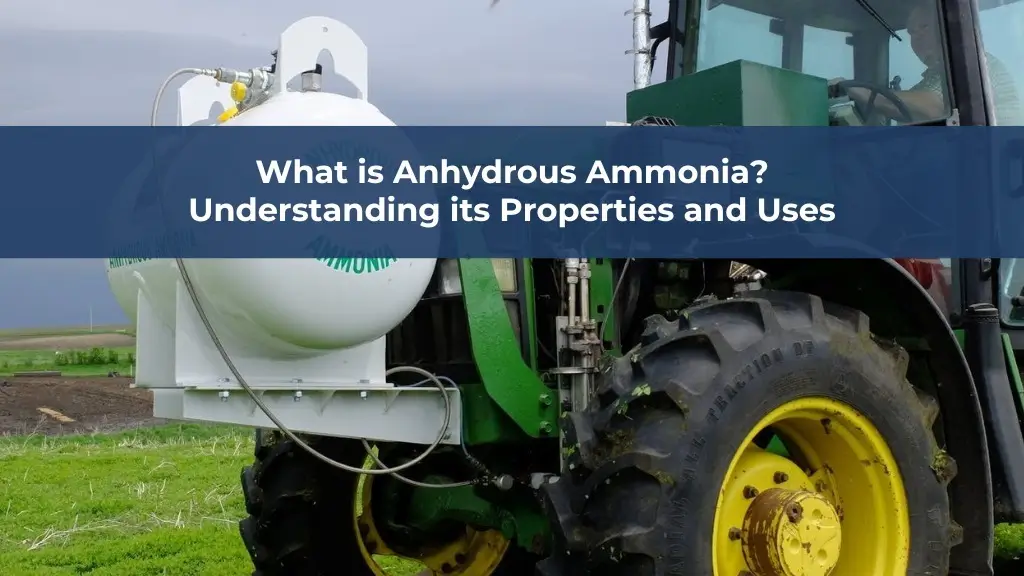
What is Anhydrous Ammonia? Understanding its Properties and Uses
Key Highlights Water-free pure NH3: Anhydrous means no water — stored at ~10 bar at 25°C or -33°C at atmospheric pressure; 82% nitrogen by molecular weight. IS 5116 standard: BIS quality standard for anhydrous ammonia — Grade 1 (refrigerant, ≥99.95% NH3) and Grade 2...

Top Industrial Uses of Liquor Ammonia: From Cleaning to Manufacturing
Key Highlights Top sectors: Textiles (largest), rubber/latex, water treatment, cleaning products, and paper and pulp — the five largest industrial consumers of liquor ammonia in India by volume. Grade matters: IS 6099 Grade I (25%) for most industrial applications;...
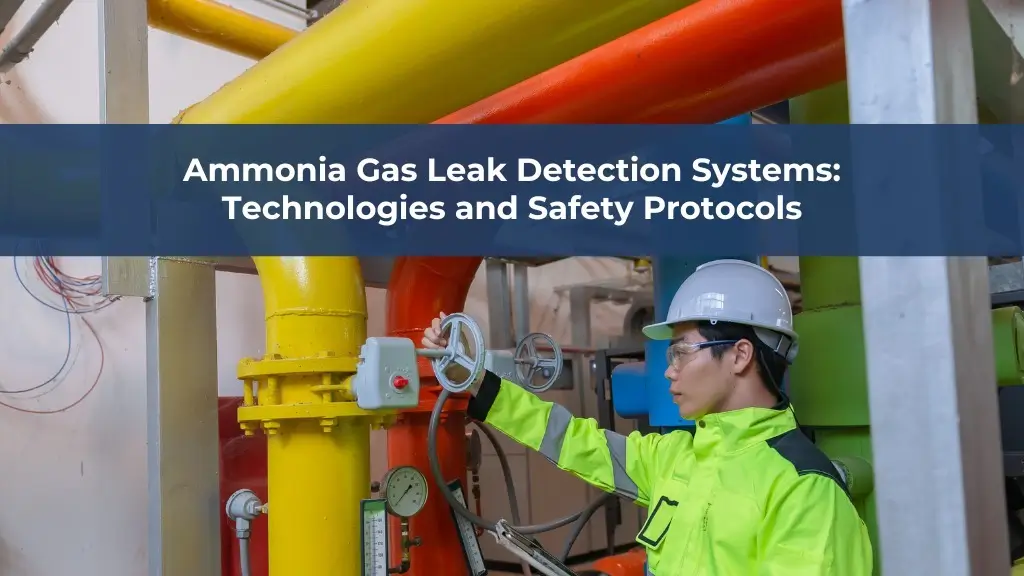
Ammonia Gas Leak Detection Systems: Technologies and Safety Protocols
Introduction Ammonia Gas is a linchpin of modern industry, vital to refrigeration, agriculture, and chemical manufacturing. Yet, its potency comes with peril. A leak, even in trace amounts, can inflict severe harm on human health, corrode industrial infrastructure,...
Innovate with Chemistry,
Excel with Us.